


UNLIMITED ACCESS TO 80 CURATED AI COURSES

When you sign up for any of our programmes

R2/0713/6/0035(MQA/FA13340)11/29

Bachelor of Technology (Honours) in Mechatronics

This cutting-edge offering immerses you in the dynamic synergy of mechanical, electrical, computer, and industrial engineering, enabling you to craft intelligent, integrated systems, machines, and processes.

Why Study with Us

In a rapidly evolving landscape where electronic components seamlessly integrate with mechanical devices, our programme equips you with the foundational knowledge and principles of mechatronic engineering. Here, you’ll cultivate an expert-level proficiency in harmoniously integrating mechanics, electronics, and software, all with a keen eye on the future.

You’ll become a master of the tools and techniques essential to tackle the intricate challenges of mechatronics, designing systematic solutions that prioritise public health, safety, and environmental sustainability. Join us as we collectively shape the future of technology through the exciting and innovative field of Mechatronics. Your journey to technological excellence begins here.

Our Advantage

IoT-Focused Curriculum

Equipping you for the
Fast-Changing Tech World

Our curriculum is centered on the Internet of Things (IoT), arming you with valuable skills to thrive in the constantly evolving technology landscape. With the IoT’s rapid growth, our programme ensures relevance and boosts employability, making our graduates highly sought-after in a competitive job market.

Advanced Manufacturing Specialisation

Empowering Students for the Future

Our specialise programme in advanced manufacturing equips students with the essential skills and knowledge needed to excel in the evolving manufacturing landscape. By staying ahead of the curve, we ensure that both our students and our institution remain competitive, meeting the demands of the job market. With a strong focus on high-demand sectors like the semi-conductor and automotive industries, our graduates are not only job-ready but also poised to drive technological innovation in the industry.

Sustainable Engineering Excellence

Shaping a Greener Future

Our program is dedicated to meeting the increasing demand for eco-friendly solutions in engineering. We empower students to design innovative, sustainable solutions for real-world challenges, allowing our institution to play a vital role in the future of sustainable engineering. With a focus on global environmental and societal issues, our graduates possess a competitive edge, as they excel in creating eco-friendly solutions that align with the values of environmentally conscious employers.

Cutting-Edge Software Tools

Empowering Tech-Relevance

Our focus on the latest software and technology keeps students and our institution up to date in the ever-evolving tech landscape. Through hands-on experience, students gain practical skills with modern software tools, boosting efficiency and productivity. These sought-after skills make our graduates highly valuable to employers.

Instructed by Industry Experts

Taught by tutors with industry experience or specialised expertise.

Bachelor of Technology in Mechatronics Course Overview

Technology in Mechatronics Essentials Quick Facts

All the facts and figures about your study programme at a glance

Study Model

Online ODL

Full Time: 3 Years
Part Time: 5 Years

Bachelor of Technology in Mechatronics

126 Credits

Language

English

Accreditation & Recognition

Accreditation

Malaysian Qualifications Agency (MQA)

Fees & Scholarships*

Tuition Fees

RM33,138

Scholarships Available


*Terms & Conditions Apply

Study Duration

Study Start

Jan, May, Sep

Duration

3 years – ODL full time
5 years – ODL part time

Top Core Courses

Get a head start on your career with our Bachelor of Technology (Honours) in Mechatronics. Here are some core courses designed to equip you with the most relevant and up-to-date skill set:
Process Control and Instrumentation

This course aim provides students with a basic understanding of process control and instrumentation. The basic principles of process control are described for students to gain a general understanding, followed by the sensor and its characteristics. The basic elements to construct a process control block diagram, discrete-state, and continuous process control are explained with examples. The students also will be exposed to both analog and digital signal conditioning as well as the basic concepts of analog-to-digital converters (ADC) and digital-to-analog converter (DAC). Both ADC and DAC are very useful as they act as an interface between an analog (e.g., the sensor) and digital system (e.g., the microcontroller).

Python Programming 1

Python is the fastest-growing programming language globally, mainly due to its simplicity, large community, and wealth of applications; Python is faster at complex calculations, can handle huge datasets (big data), has more packages (libraries), and can be used to build standalone or web-based applications. Python is also much friendlier and easier to learn than C++, thus is viewed as a language suitable for beginners and advanced programmers alike .

Automation and Robotics

This course is to provide the knowledge of sensors, actuators and machine vision apply to robotics, and the mathematical and computational techniques for analyzing robotic motion.electronics, mechanics and software.work holding, tooling, parts assembly, material handling and the required software.

Mechatronics Systems Design with IoT Application

This course aims to provide students with knowledge, skills, and exposure to the integrated design process of mechatronics systems. It enables the students to appreciate components of mechatronics systems, such as sensors and actuators and how they can be integrated into a useful system for value creation.

Computer Aided Design and Manufacturing

This course is to introduce the use of computer aided systems in manufacturing, and to expose students to various features in CAD/CAM that enable integration between design and manufacturing.

Your Learning Pathway: From Basics to Mastery

Online (ODL), Full Time
YEAR 1: FULL-FLEDGED INTRODUCTION, BASICS AND FUNDAMENTALS Online (ODL), Full Time (Accelerated Mode)

Students will be introduced to a thorough combination of foundation mathematics, electrical circuits, the basics of electronics and the fundamentals of engineering mechanics.

YEAR 2: FOCAL MECHATRONICS KNOWLEDGE & INCORPORATION OF INDUSTRY 4.0 Online (ODL), Full Time (Accelerated Mode)

At the end of year 2, students will be equipped with the core knowledge of mechatronics, IR 4.0-related technologies, encompassing mechatronic systems design, IoT and CAD.CAM.

YEAR 3: KNOWLEDGE APPLICATION Online (ODL), Full Time (Accelerated Mode)

Students will be required to undertake an independent full-year project that will enable them to put their mechatronics engineering science knowledge and practice into application.

Online (ODL), Part Time
YEAR 1: FULL-FLEDGED INTRODUCTION Online (ODL), Part Time

Students will be introduced to a thorough combination of foundation mathematics, electrical circuits and manufacturing technology.

YEAR 2: BASICS AND FUNDAMENTALS Online (ODL), Part Time

Students will learn the basics of electronics and the fundamentals of engineering mechanics.

YEAR 3: FOCAL MECHATRONICS KNOWLEDGE Online (ODL), Part Time

At the end of year 3, students will be equipped with the core knowledge of mechatronics, particularly in process control, microprocessors, automation and robotics.

YEAR 4: INCORPORATION OF INDUSTRY 4.0 Online (ODL), Part Time

Students’ mechatronics knowledge will be extended to include IR 4.0-related technologies, encompassing mechatronic systems design, IoT and CAD.CAM.

YEAR 5: KNOWLEDGE APPLICATION Online (ODL), Part Time

Students will be required to undertake an independent full-year project that will enable them to put their mechatronics engineering science knowledge and practice into application.

Study Content

MPU COURSES
No. Course Code Course Title Credit Hours
1 MPU3183 Penghayatan Etika dan Peradaban OR 3
MPU3143 Bahasa Melayu Komunikasi 2 (for international students)
2 MPU3193 Philosophy and Current Issues 3
3 MPU3213 Bahasa Kebangsaan A (for students without SPM credit in BM) OR 3
MPU3223 Decision Making Skills (for students with SPM credit in BM and foreign students)
4 MPU3422 Integriti dan Anti Rasuah (for all students who have not completed KIAR at the cert/ diploma level) OR 2
MPU3412 Co-curriculum (for all students who have completed KIAR at the cert/ diploma level)
Subtotal Credit Hours 11
CORE (COMPULSORY) COURSES (Take all courses)
No. Course Code Course Title Credit Hours
1 WUC111/03 Foundation Mathematics (APEL.C) 3
2 WUC114/03 University Mathematics A (APEL.C) 3
3 WUC118/03 Computers in a Networked Society 3
4 TEE101/03 Engineering Mathematics I *a (APEL.C) 3
5 TEE102/03 Engineering Mathematics II *b (APEL.C) 3
6 TEE206/03 Engineering Mathematics III *c (APEL.C) 3
7 TEC210/03 Technopreneurship (APEL.C) 3
8 TCC 238/03 Structured Programming (APEL.C) 3
9 TEE103/03 Circuit Theory I (APEL.C) 3
10 TEE105/03 Digital Electronics (APEL.C) 3
11 TEE201/03 Introduction to Electrical Machine and Power Systems *d (APEL.C) 3
12 TEE205/03 Analogue Electronics *e (APEL.C)  3
13 TEE104/03 Fundamentals of Electronics (APEL.C) 3
14 TME203/03 Engineering Mechanics – Statics *f(APEL.C) 3
15 TME204/03 Engineering Mechanics – Dynamics *g(APEL.C) 3
16 TME106/03 Thermodynamics *h(APEL.C) 3
17 TME104/03 Fluid Mechanics *i(APEL.C) 3
18 TME103/03 Manufacturing Technology (APEL.C) 3
19 TME201/03 Engineering Management & Ethics(APEL.C) 3
20 TME105/03 Engineering Drawing and CAD (APEL.C) 3
21 TEE302/03 Signals and Systems *j(APEL.C) 3
22 TEL203/03 Process Control and Instrumentation *k(APEL.C) 3
23 TEL205/03 Microprocessor & Microcontroller *l (APEL.C) 3
24 TEL306/03 Control Systems *m(APEL.C) 3
25 TME301/03 Mechanical Engineering Design  l (APEL.C) 3
26 TME205/03 Material Science  l (APEL.C) 3
27 TME207/03 Fluid Power Systems & Programmable Logic Controller (PLC)  l (APEL.C) 3
28 TME303/03 Automation and Robotics *n  (APEL.C) 3
29 TME305/03 Computer Aided Design and Manufacturing *o  (APEL.C) 3
30 TME306/03 Mechatronics System Design with IoT Application(APEL.C) 3
31 TME307/03 System Engineering and Simulation *p(APEL.C) 3
Subtotal Credit Hours 93
INDUSTRIAL TRAINING
No. Course Code Course Title Credit Hours
1 TUC209/06 Industrial Training *q  (APEL.C) 6
Subtotal Credit Hours 6
FINAL YEAR PROJECT
No. Course Code Course Title Credit Hours
1 TEL309/10 ME Project *r 10
Subtotal Credit Hours 10
ELECTIVE COURSES (Choose Any Two)
No. Course Code Course Title Credit Hours
1 BBM103/03 Principles & Practice of Management 3
2 BBM205/03 Basic Accounting 3
3 BBM208/03 Business Ethics 3
4 BBM209/03 Effective Leadership 3
5 BLC301/03 Operations Management 3
6 TEE219/03 Python Programming 1 (APEL.C) 3
7 TEE312/03 Python Programming 2 *s(APEL.C) 3
8 TEL202/03 Power Electronics and Drives *t(APEL.C) 3
9 TME206/03 Additive Manufacturing 3
10 TME308/03 Digital Manufacturing 3
11 TME311/03 Industrial IoT 3
12 TME312/03 Artificial Intelligence 3
Subtotal Credit Hours 6
Total Credit Hours 126
PREREQUISITES
No. Course Code & Title Prerequisite
a TEE101/03 Engineering Mathematics I WUC114/03
b TEE102/03 Engineering Mathematics II WUC114/03
c TEE206/03 Engineering Mathematics III WUC114/03
d TEE201/03 Introduction to Electrical Machine and Power Systems TEE103/03
e TEE205/03 Analog Electronics (APEL.C) TEE 104/03
f TME203/03 Engineering Mechanics – Statics WUC114/03
g TME204/03 Engineering Mechanics – Dynamics TME203/03
h TME106/03 Thermodynamics WUC114/03
i TME104/03 Fluid Mechanics WUC114/03
j TEE302/03 Signals and Systems TEE102/03
k TEL203/03 Process Control and Instrumentation TEE104/03
l TEL205/03 Microprocessor and Microcontroller TEE105/03
m TEL306/03 Control Systems TEL203/03
n TME303/03 Automation and Robotics TEE101/03
o TME305/03 Computer Aided Design and Manufacturing TME105/03
p TME307/03 System Engineering and Simulation TEE101/03
q TUC209/06 Industrial Training Completed 70 credits
r TME309/10 ME Project Completed 70 credits
s TEL202/03 Power Electronics and Drives TEE104/03
t TEL202/03 Power Electronics and Drives TEE205/03
IMPORTANT NOTES
  1. Student who do not have a credit in Bahasa Melayu at the SPM level must register for MPU3213/03 Bahasa Kebangsaan A.
  2. Those who already have a credit in Bahasa Melayu at the SPM level are required to register for MPU3223/03 Decision Making Skills.
  3. The KIAR course needs to be taken only once during the entire study period for a student, whether at Certificate, Diploma, or Bachelor levels. Completing the KIAR course enables a student to receive an exemption at the next level of study. The student will need to take another course to fulfill the graduation credit hours at the undergraduate level.
GRADUATION REQUIREMENTS
No. Courses Credits
1 MPU 11
2 Core (Compulsory) 93
3 Industrial Training 6
4 Final Year Project 10
5 Electives 6
Total 126
Graduation requirements: minimum 126 credits

Admission

Entry Requirements

Candidates with the following criteria will be eligible to be considered for admission into the undergraduate programme:

1. Regular Entry

Candidates must possess a minimum of:

  • A pass in STPM with a minimum Grade C (GP 2.0) in any 2 Mathematics or Science subjects or its equivalent; OR
  • UEC III with a minimum 5 Grade B including any 2 Mathematics or Science subjects or its equivalent; OR
  • A-Level or HSC with minimum Grade D in any 2 Mathematics or Science subjects or its equivalent ; OR
  • A Diploma in Engineering/Engineering Technology or equivalent with a minimum CGPA of 2.0; OR
  • A Diploma in Vocational/Technical/Skills in Engineering/Engineering Technology or equivalent with a minimum CGPA of 2.5, pass bridging courses*; OR
  • Matriculation/Foundation in Science/Engineering qualification with a minimum CGPA of 2.00 out of 4.00, or any equivalent qualification; OR
  • Any other Diploma in Science or Business studies with a minimum CGPA of 2.5 may be admitted subject to a rigorous internal assessment** possess and a credit in Mathematics at the SPM level or its equivalent; OR
  • Other equivalent qualifications recognised by the Malaysian Government.

*  Bridging courses must be passed in the first year of studies.

**Internal assessment = Interview conducted by School

APEL Entry: Turning Experience into Credentials

Accreditation of Prior Experiential Learning (APEL) provides an opportunity for individuals with working experience but lack of formal academic qualifications to pursue their tertiary studies. APEL involves the identification, documentation and assessment of prior experiential learning to determine the extent to which an individual has achieved the desired learning outcomes, for access to a programme of study.

Applicants should comply with the following admission criteria stipulated by the Ministry of Higher Education (MOHE) and Malaysian Qualifications Agency (MQA):

The candidate should be:

  • The applicant shall be 21 years of age in the year of application and must possess relevant work experience.
  • Pass the APEL.A assessment for Bachelor’s Degree level.

Find out how to apply: APEL

Scholarships & Financial Aid

For details and inquiries on Scholarships & Financial Aid, you can find out more here.

Future Career Paths with a Technology in Mechatronics Degree

Diploma and certificate holders, technicians, manufacturing specialists, technical assistants and technical staff with relevant working experience in mechanical and electronics-related areas will find this programme useful. With the degree, you can expect to advance further in your current job or set a new career path elsewhere.

5
Manufacturing
5
Mechanical Technology
5
Production
5
Design, Development or Research
5
Electronics
5
Automation

Why WOU is The Best Online University of Choice

If You are Working While Studying

Your Studies are Felxible icon

Your Studies are Flexible
and 100% Online

Accredited Globally icon

Accredited & Globally
Recognised

You Gain icon

You Gain
Full Support

The Ideal Mix of Theory icon

The Ideal Mix of Theory
and Practice

Our Success Stories

Discover the impact we've had, straight from our campus family.

Levenesvarn A/L Nesen

Bachelor of Technology (Honours) in Mechatronics

The atmosphere at WOU is very friendly and encouraging. A great experience from start to graduate!

Soh Choon Guan

Bachelor of Technology (Honours) in Construction Management

We should prioritize continuous learning above all else. Completing the Bachelor of Technology in Construction Management enhances the knowledge necessary for my field and boosts my confidence in interacting with others. WOU provides a seamless experience to make it easier for you.

Brendan Tneh

Bachelor of Technology (Hons) in Electronics

I am proud to have completed my Bachelor of Technology in Electronics at Wawasan Open University. The program was challenging but rewarding, and I feel confident that I have gained the knowledge and skills necessary to succeed in my future career. The faculty was knowledgeable and supportive throughout my studies, and I appreciated the flexibility of the program which allowed me to balance my studies with other commitments.

Meet Our Faculty Members

Explore our Faculty Research Profiles for detailed research interests and active projects across our academic.

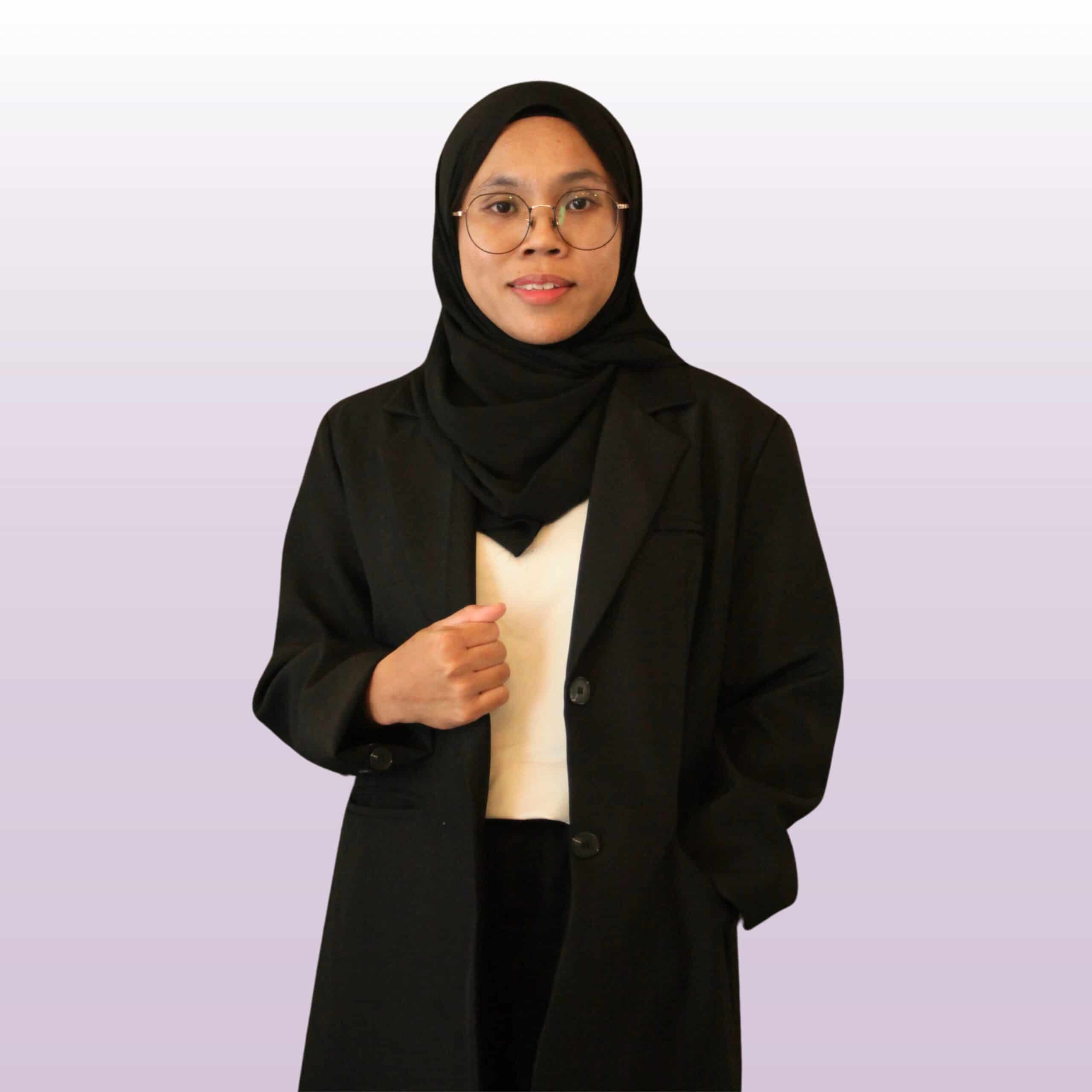
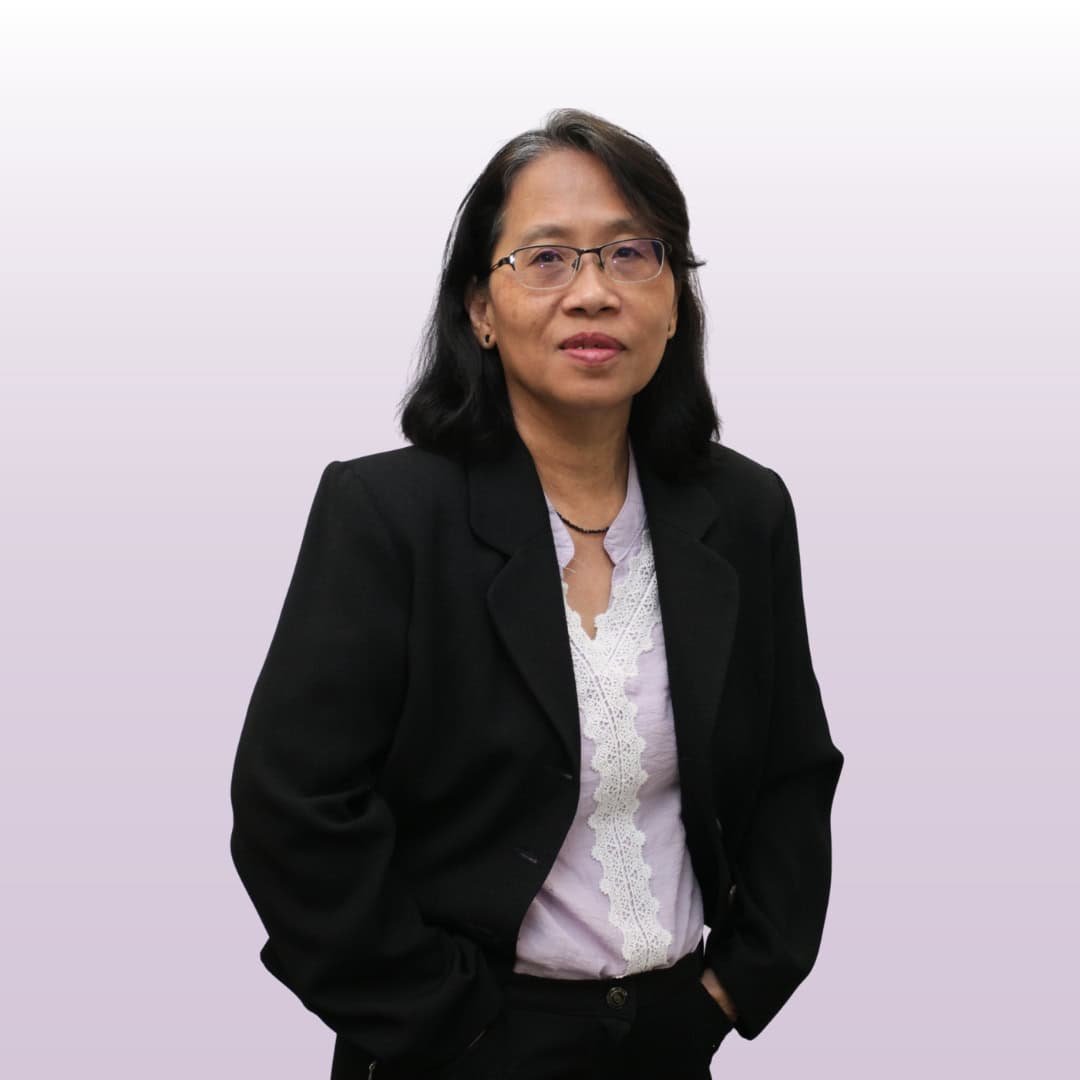
Our faculty members blend academic excellence with rich industry experience, ensuring your education is both rigorous and practically relevant. Committed to your success, they equip you with the insights and skills essential for navigating the dynamic landscape of technology and engineering.

Assoc. Prof. Ts. Dr. Lee Yong Siang

Associate Professor

Ts. Chew Bee Leng

Lecturer

Ts. Shirley Tan Cheng Peng

Lecturer

Dr. Ong Teng Yeow

Senior Lecturer

YOU MIGHT ALSO BE INTERESTED IN THESE STUDY PROGRAMMES
