
Every year, World Autism Awareness Day reminds us of the importance of recognising that autism is not just a condition, but a part of the diverse ways children learn, communicate and experience the world.
Globally, autism affects approximately 1 in 100 children, with reported prevalence increasing over time due to heightened public awareness, expanded diagnostic criteria and improved screening practices.
In Malaysia, autism diagnoses have risen significantly over the past decade, with 67,614 individuals officially registered under the National Social Welfare Department (JKM) as of late 2024. This number is expected to rise as awareness and early detection improve. As awareness grows, two questions become more important: how early can we recognise the signs and what happens next?
The Window of Opportunity: Why Early Recognition Matters
The neuroplasticity of a child’s brain between the ages of 18 to 24 months represents a critical window. During this time, children build foundational skills in communication, social interaction and learning.
Early recognition plays an important role in helping parents, guardians and educators better understand how a child learns and interacts within their environment.
When identified early, children can receive the appropriate support and care needed to strengthen their development and grow with confidence.
Early intervention services such as speech therapy, occupational therapy, and behavioural support are most effective when initiated before the age of three. This important period holds a key role in shaping their overall development.
Understanding Developmental Milestones
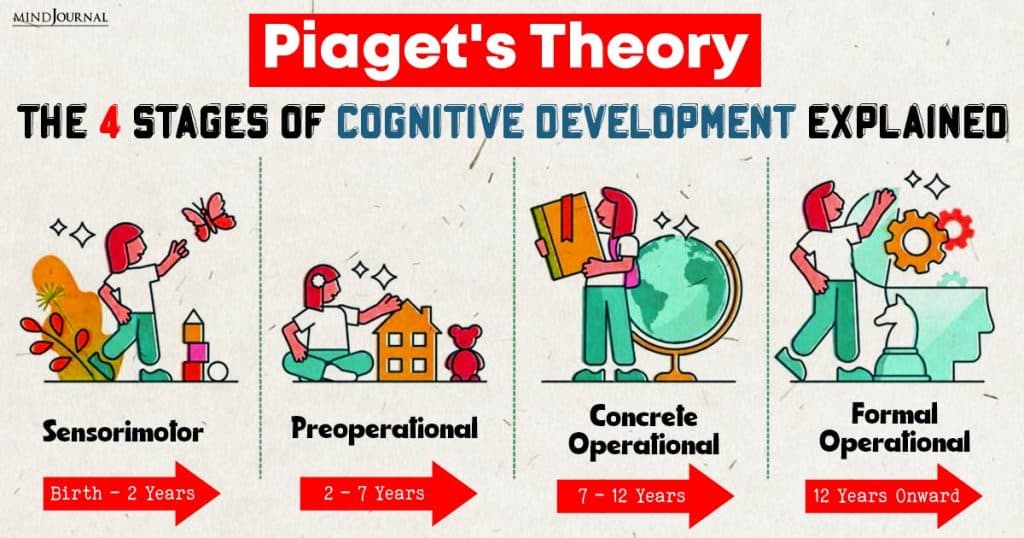
To better recognise early signs of autism, it helps to understand how children typically develop. Educational psychologist Jean Piaget, a pioneer in studying child development, outlined four key stages of cognitive growth that show how children begin to understand and interact with the world around them.
- Sensorimotor Stage (birth to ~2 years)
Children explore the world through movement and sensory experiences such as touching, seeing, and hearing. They begin to recognise familiar people, respond to stimuli and develop early forms of communication. - Preoperational Stage (2 to ~7 years)
Language develops rapidly during this stage. Children begin to use words, images and symbols to express themselves, engage in pretend play and interact more with others, though their thinking is still largely centred on their own perspective. - Concrete Operational Stage (7 to ~11 years)
Thinking becomes more logical and organised. Children start to understand cause and effect, follow rules and grasp more complex concepts tied to real-life situations. - Formal Operational Stage (12 years and above)
Adolescents develop the ability to think abstractly and reason hypothetically. They can consider different perspectives, solve complex problems and think beyond the immediate environment.
While these stages offer useful reference points, children develop at different paces. Milestones should not be treated as rigid benchmarks, but as indicators that help adults notice patterns in a child’s development.
What matters most is recognising when differences are consistent and responding early.
Early Signs of Autism in Young Children
Autism presents differently in every child, but some early indicators may be observed during the toddler and preschool years.
These may include:
- Limited eye contact or difficulty engaging in back-and-forth interaction
- Delayed speech or differences in how language is used
- Preference for routines or strong resistance to change
- Repetitive movements or focused interests
- Sensitivity to sounds, textures or other sensory input
- Other possible signs include limited response to name, lack of pointing or showing gestures, and unusual reactions to social engagement.
Not every child shows the same combination of traits, but recognising these patterns early is key.
Speech Delay or Autism?
Speech delay is a common concern among parents. Sometimes, it reflects a typical variation in development; in other cases, it may signal broader communication differences associated with autism.
A child with speech delay may still attempt to communicate through gestures or social interaction. In contrast, a child on the autism spectrum may show differences in both verbal and non-verbal communication, including limited gestures or difficulty responding to social cues.
Diagnosis should always be made by a qualified professional, such as developmental paediatricians, clinical psychologists, or speech-language pathologists.
Understanding these distinctions can help parents and educators decide when to seek professional guidance.
Why Early Support Makes a Difference
When developmental differences are identified early, support can be introduced at a stage when the brain is most adaptable.
Early intervention can help children:
- strengthen communication skills
- build social connections
- develop confidence in structured learning environments
Support does not always mean formal therapy. It can also take place in everyday settings, through structured routines, guided interaction and responsive teaching approaches that align with how a child learns best. Family involvement and consistent reinforcement at home also play a key role in progress.
In early learning environments such as preschools, these forms of support are often embedded into daily activities, such as play, communication and social interaction with peers. This makes early childhood settings an important space where developmental differences can be both observed and supported consistently.
As a result, the role of educators becomes increasingly important, not only in recognising early signs but in shaping how children are supported in meaningful and inclusive ways.
Special Needs Educators and the Evolution of Inclusive Classrooms
In early childhood settings, teachers are often among the first to observe developmental patterns across different situations. This enables them not only to identify early signs of autism, but also to respond in ways that support each child’s growth.
Trained special needs educators are equipped to effectively support children with autism through key competencies such as:
- recognising developmental differences through careful observation
- adapting teaching strategies to suit different learning styles
- creating structured, predictable and supportive environments
- encouraging communication and social interaction in inclusive ways

Collaboration is equally important. Effective support involves educators, parents and professionals working together to ensure consistent guidance.
As more children are identified with autism, inclusive classrooms are becoming mainstream rather than the exception. This aligns with the United Nations’ Sustainable Development Goals (SDG 4: Quality education) promise to leave no child behind, especially in the early years when timely support can make a lasting difference.
Inclusive education relies on special needs educators who are equipped with both knowledge and practical skills to support neurodiverse learners. Building this capability requires structured training, exposure to real classroom scenarios and a deep understanding of how children develop and learn differently. Continuous professional development and access to updated evidence-based teaching methods are essential for sustaining inclusive learning.
Be Part of the Change in Inclusive Education
At Wawasan Open University’s (WOU) School of Education, Humanities and Social Sciences (SEHS), programmes such as the Diploma in Early Childhood Education (DECE) and the Bachelor of Education (Honours) with specialisations in Special Needs Education and Primary Education are designed to equip educators to support children across a wide range of developmental needs.
Take the first step towards shaping inclusive learning environments – where every child is understood, supported and given the opportunity to thrive.
The May 2026 intake is now open for enrolment. Speak with our advisors to explore pathways that align with your educational and career aspirations.