
Roundtable explores how employer needs, leadership support, workplace application, and practical AI adoption can shape collaboration between the two institutions.
For workforce learning to deliver business results, the classroom cannot be the end point. Employees also need opportunities to apply what they learn to real problems within an organisation that supports new ways of working.
This was among the key themes discussed during the recent industry roundtable convened by Wawasan Open University (WOU) and the Singapore Institute of Management (SIM) on 4 September 2026.
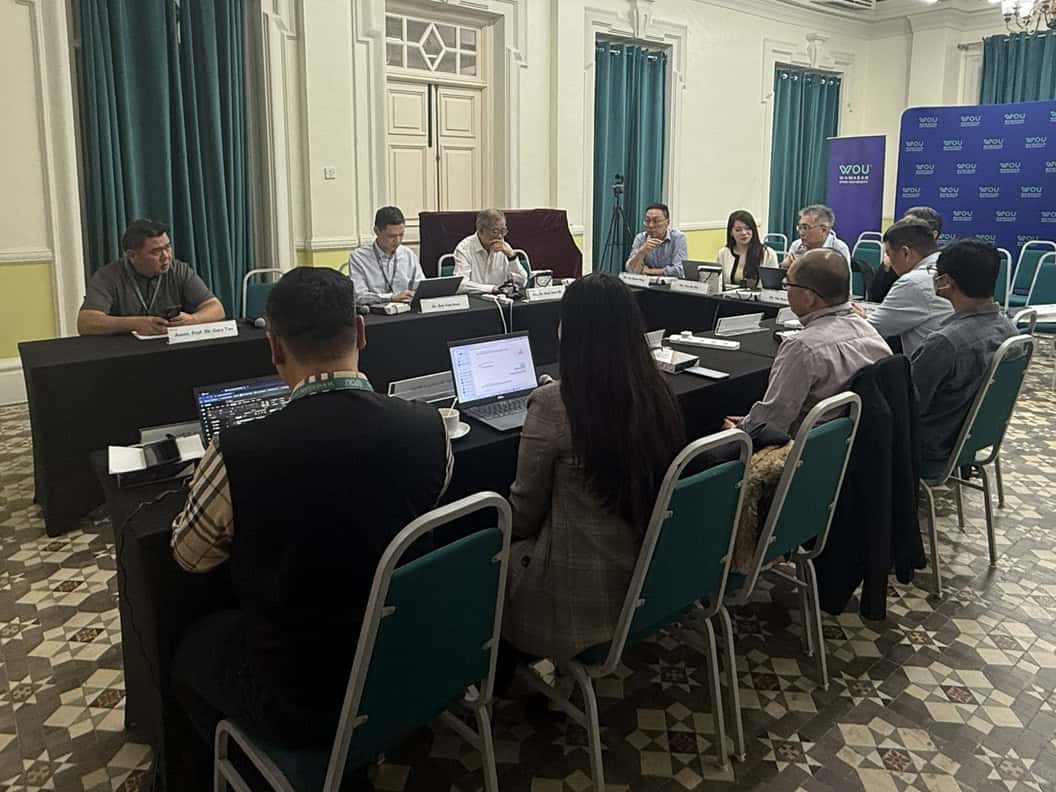
The dialogue brought together leaders from four homegrown companies – Soon Soon Group, Lingkail Sdn Bhd, Sophic Automation, and Greatech – who offered their perspectives on continuing education and training, talent upskilling, and work-based learning.
The discussion pointed to a common principle: effective workforce development begins with understanding the organisation, the problem it wants to solve, and how employees will use what they learn.
Start with the business problem
Soon Soon Group Managing Director Dato’ Dr. Neoh Soon Bin urged education providers to engage employers directly, particularly human resources (HR) teams and business decision-makers.
“Focus on the organisations that employ people, not the individual learners,” he said.
He added that because medium and large enterprises often have existing training needs analyses, partnering with HR provides a clearer picture of internal skill gaps.
In his presentation, Ho Seong Kim, Chief Executive Officer of SIM Academy, said employers often measure training effectiveness by the value it creates.
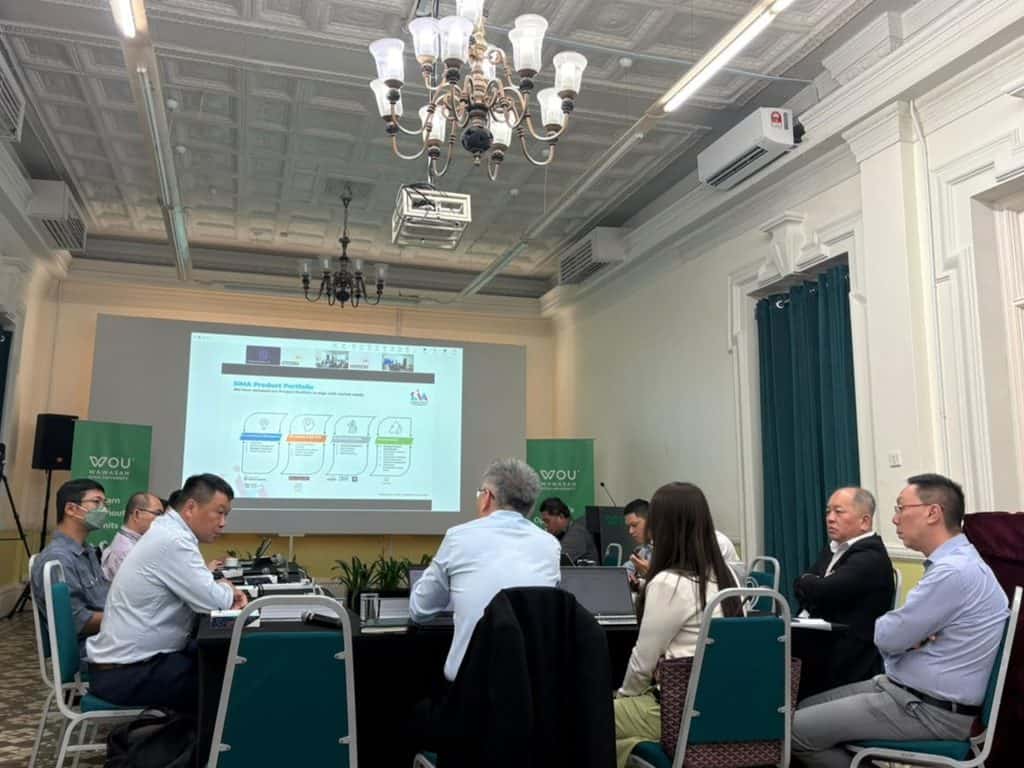
“Individual learning and reskilling is crucial, but translating skills into results can only happen within an operational environment,” Ho said.
“Without that workplace connection, learning remains isolated with the individual rather than generating wider organisational value.”
Build workplace application into the programme
Ho stressed that formal learning is only one part of talent development. Employees need structured opportunities to practise, receive feedback, and apply new knowledge directly on the job.
He cited SIM Academy’s programme with nursing teams from Singapore’s National University Health System. Rather than training individuals separately, intact teams learn together and receive mentoring while tackling live process-improvement projects in their departments.
“If you want implementation, if you want learning translated into practice, you need to do the development side as well,” he said.
Leadership must support the change
The discussion also underscored the influence of organisational culture and leadership.
Sophic Automation’s Brandon See Toh noted that rapid business growth often brings together talent from different industries, cultures, and working environments. Established habits can shape how readily new practices are adopted.
Training alone is not enough, Ho argued. What employees learn must also be reinforced by the workplace through management expectations, incentives, and organisational practices.
“The system needs to work in tandem with the learning in order to create a change.”
Drawing on his experience, Dr. Leow Cheah Wei, Director of Lingkail, highlighted the importance of securing executive buy-in early.
“We have to convince the power sponsor first,” he said.
This is particularly relevant for small and medium enterprises (SMEs), where owners and senior leaders often have direct control over resource allocation and implementation, he added.
Critical thinking remains essential in the AI era
The dialogue also addressed the evolving skill sets required as artificial intelligence (AI) adoption grows across industries.
Ho observed that while AI changes how work gets done, employees still need to evaluate information critically and communicate effectively.
Echoing this, Dato’ Dr. Neoh urged users to question and challenge AI rather than simply accept its answers or treat AI tools as sophisticated search engines.
He shared an example from his team’s experience developing a product slogan. Finding the initial AI-generated suggestions unconvincing, they developed their own concept and used AI to evaluate and improve it.
“When you engage AI interactively to test and refine your thinking, it becomes much more valuable than simply asking for a solution,” he said.
Explore regional management opportunities
Beyond immediate workforce needs, participants discussed building management capabilities for companies expanding across Southeast Asia.
Leveraging Malaysia’s multicultural and multilingual strengths, Dato’ Dr. Neoh proposed establishing a dedicated centre focused on Southeast Asian management expertise.
Ho also highlighted SIM Academy’s focus on systems leadership, encouraging organisations to break down departmental silos. The approach trains leaders and employees to understand how different functions connect and align around shared strategic goals.
Turning dialogue into action
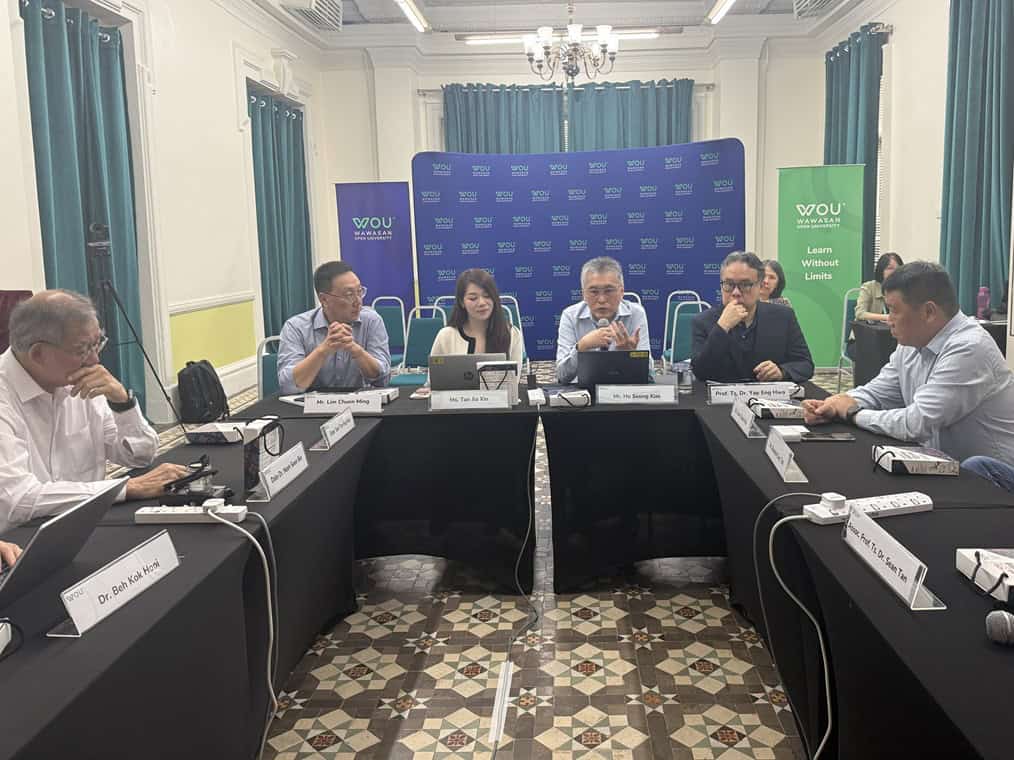
The dialogue established a practical blueprint for the next phase of the WOU-SIM partnership: co-designing programmes tailored to specific organisational challenges and workplace outcomes.
It also set a clear benchmark for future collaboration: learning must translate into improvements at work. Sustaining that impact requires strong leadership support, enabling systems, and practical opportunities to apply learning in the workplace.