
Wawasan Open University (WOU) and China’s Henan Institute of Economics and Trade (HIET) are spearheading a four-party collaboration to develop and deliver industry-focused technical and vocational education and training (TVET) programmes for Malaysian workers and students at local higher education institutions.
The initiative brings together WOU, HIET, Yonyou (Malaysia) Sdn. Bhd., and the Malaysia-Henan Chamber of Commerce to jointly establish Fanli Academy (Malaysia), creating a platform for transnational industry–academia cooperation in vocational education and workforce development.
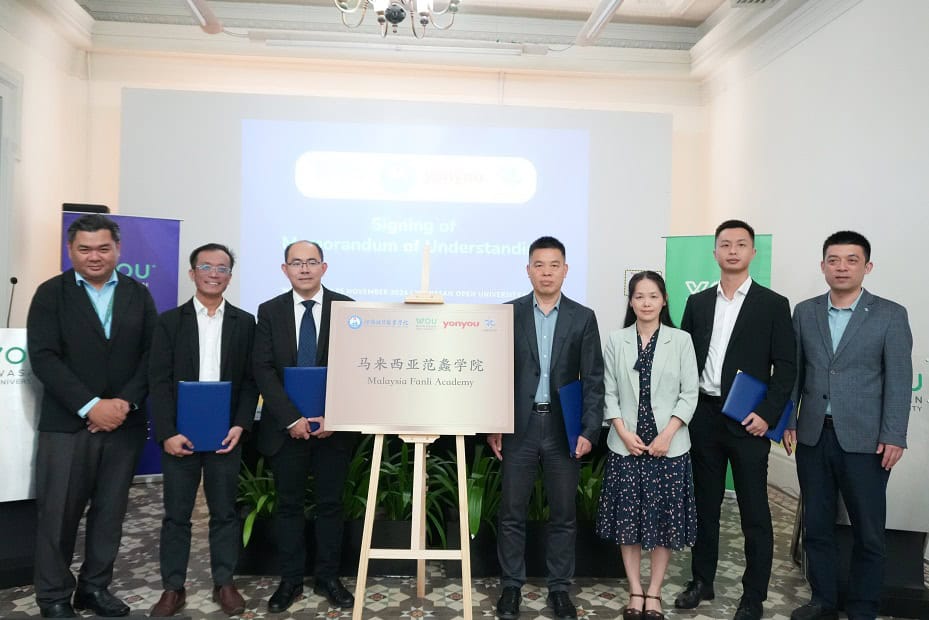
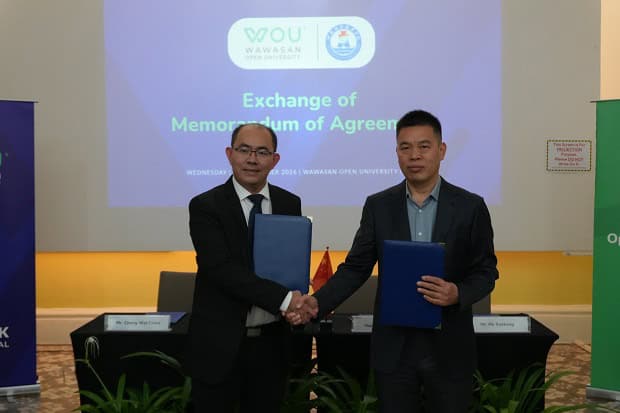
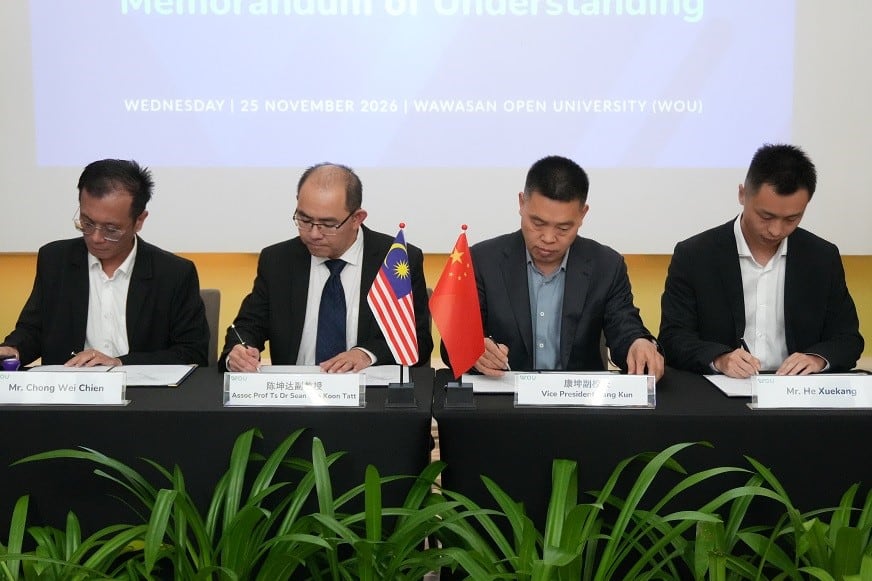
The collaboration was formalised at WOU’s historic Homestead campus on 25 November 2026 through the signing of a four-party Memorandum of Understanding (MoU), alongside the exchange of a bilateral Memorandum of Agreement (MoA) between WOU and HIET on joint course development and vocational skills training.
Speaking at the ceremony, Consul Huang Lishi of the Consulate General of the People’s Republic of China in Penang highlighted vocational education as a key area of bilateral cooperation between Malaysia and China.
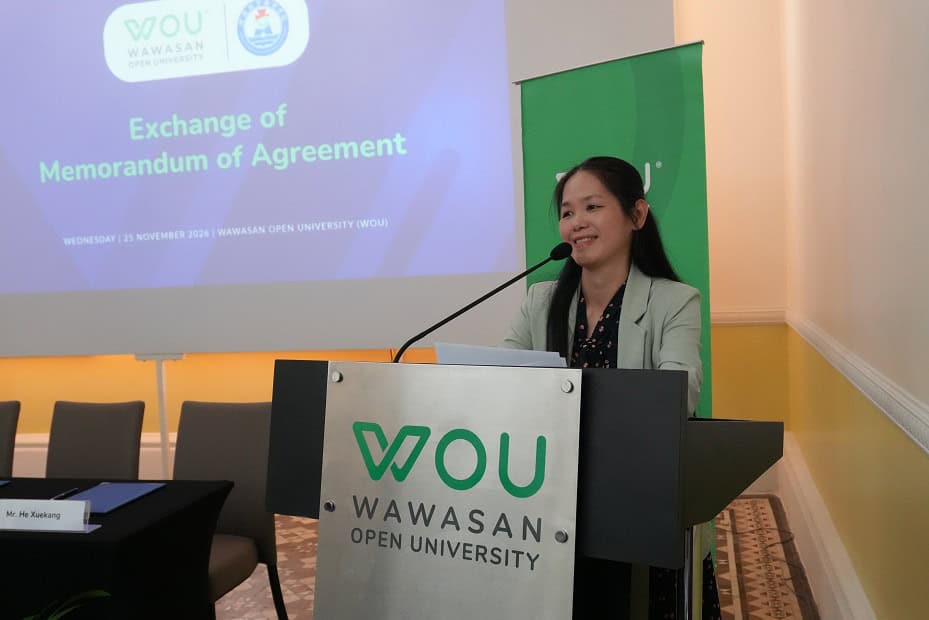
“Highly skilled talent is a vital resource for enterprise growth and national development. Cooperation in vocational education can support industrial transformation and upgrading in both countries, bringing tangible benefits to local youth, enterprises, and society,” she said.
Through Fanli Academy, the four parties will work together to provide vocational skills training in emerging technologies for employees of Malaysian enterprises and students pursuing related disciplines at local higher education institutions.
The collaboration will also encompass joint curriculum development, teaching resource sharing, exchanges involving academics and industry practitioners, and collaborative studies in vocational education and industry talent development.
Under the bilateral MoA, WOU and HIET will initially develop six courses covering machine learning, deep learning technologies, generative AI applications, business data analytics using Python, Linux fundamentals, and Kubernetes container management. Courses will be adapted to Malaysian industry requirements, incorporating workplace applications and practical case studies. Training will combine self-directed online learning with face-to-face instruction and hands-on activities.
The two institutions have also set an indicative annual target of providing vocational skills training, including AI-related professional certification assessments, to 200 participants.
HIET Vice President Kang Kun said the two institutions shared complementary strengths in vocational education, skills training, and teaching approaches.
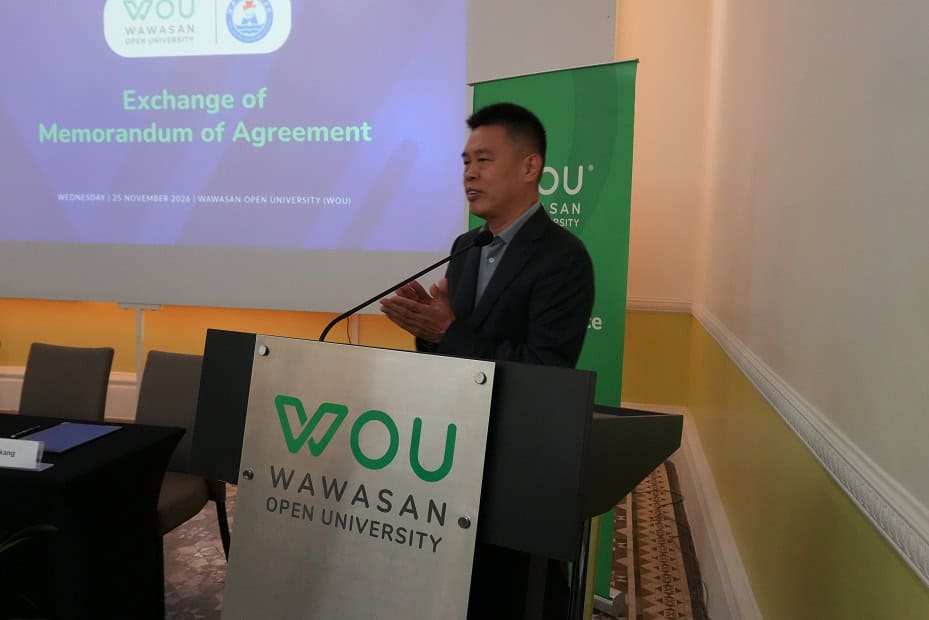
“The development needs of Malaysian enterprises will be the starting point for our collaboration. By bringing together our academic expertise and teaching resources, we aim to deliver high-quality vocational training that supports Malaysia’s industrial development and enhances the capabilities of its workforce,” he said.
WOU Deputy Vice-Chancellor (Academic), Associate Professor Ts. Dr. Sean Tan Koon Tatt, said the collaboration would build on the University’s experience in flexible, technology-enabled education and workforce upskilling.
“We understand the challenges of studying while working, and we have built our teaching and learning approach around those needs. We want to bring that experience into this partnership, particularly in developing flexible, practical training that working professionals can use,” he said.
Dr. Tan added that the partnership would also draw on WOU’s academic expertise, online learning capabilities, and teaching facilities to support the development and delivery of vocational training programmes.
The bilateral MoA was exchanged between Dr. Tan and Kang. They also signed the four-party MoU, together with Chong Wei Chien, Secretary General of the Malaysia-Henan Chamber of Commerce, and He Xuekang, representative of Yonyou Malaysia.
WOU and its partners will now focus on implementing the agreed initiatives, beginning with joint course development, industry engagement, and preparations for vocational skills training programmes.