
In a rapidly evolving digital age, Open and Distance Learning (ODL) must be redefined — not merely as a channel of widening access to education and workforce training, but as a transformative force that delivers real, measurable impact.
Speaking at the 2025 International Conference on Open and Innovative Education (ICOIE) on 9 July at Hong Kong Metropolitan University, Prof Dr Lily Chan, Chief Executive and Vice Chancellor of WOU, delivered a keynote titled “From Access to Impact: Rethinking Digital Transformation in Open Education”. Her address offered a bold vision for how ODL must evolve in an age shaped by workforce disruption, AI acceleration, and the growing demand for lifelong, skills-based learning.
“Digital transformation in open education must go beyond the adoption of tools — it demands a fundamental rethinking of what we deliver, how we deliver it, and who truly benefits from learning,” Prof Chan asserted.
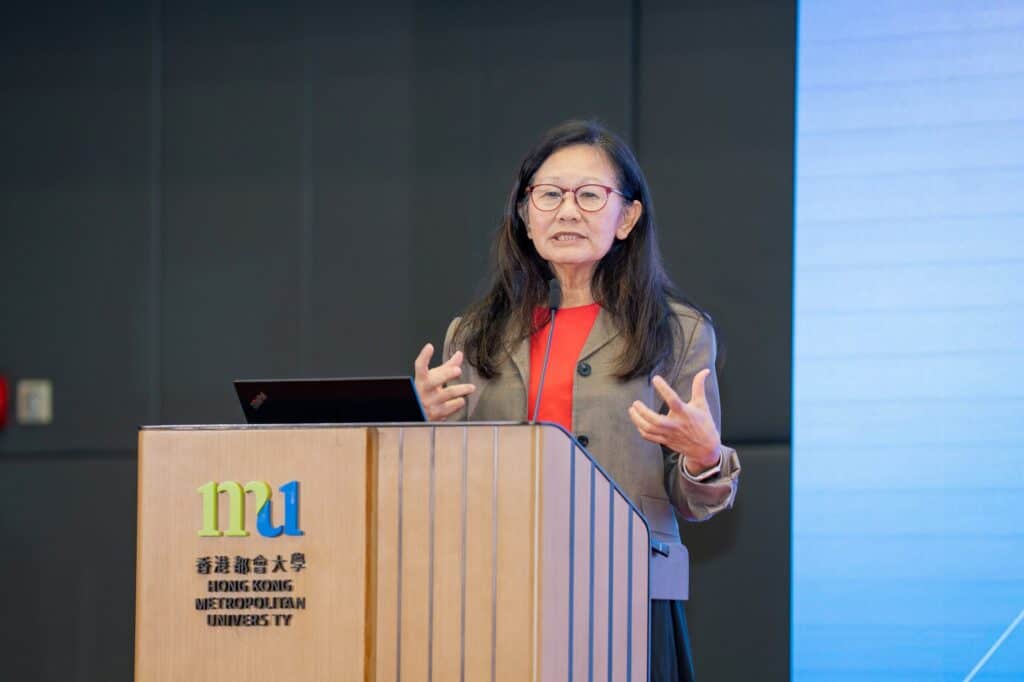
Drawing on global trends and WOU’s own transformation, Prof Chan described the shift from a conventional ODL model — centred on flexible, open entry, self-paced static content, and degree-focused delivery — to a future-ready ecosystem that is learner-driven, mobile-first, and defined by job-ready skills and stackable, lifelong learning pathways.
Today’s learners, she emphasised, expect more than flexibility. They seek relevance, modularity, clear career outcomes, and support for continuous upskilling.
“ODL has made tertiary education more accessible than ever, especially for adult learners and remote communities. But in a digital-first economy, access alone is no longer enough. The real opportunity lies in enabling learners to thrive — to gain skills, stay employable, and grow throughout life.”
Citing projections that 65% of the global workforce will require reskilling by 2030, Prof Chan underscored ODL’s growing role as a critical driver in workforce transformation.
“In Malaysia alone, 3.5 million workers are targeted for upskilling. WOU is responding with a growing suite of modular programmes and microcredentials tailored for working professionals. ODL is the most scalable and inclusive way to bridge the talent gap — not only in Malaysia, but across ASEAN.”
She outlined five strategic enablers underpinning WOU’s digital transformation: institutional purpose and culture, learner-centric design, stackable pathways, empowered staff, and alignment with national and industry priorities.
WOU’s approach includes pioneering modular credentials that allow learners to progress at their own pace, aligned to evolving workforce needs.
“Employers today are placing greater value on what you can do, not just where you studied. That’s why WOU champions stackable credentials and short, flexible programmes — aligned with industry needs and delivered through platforms like Coursera, edX, and Google — to help learners build real-world skills, one module at a time.”
Supporting this shift is WOU’s strong investment in digital capacity-building. Through its Centre for ODL Experiences (COLE), the University equips staff with continuous training in AI tools, digital pedagogy, and learner experience design — enabling educators not just to teach, but to innovate.
Prof Chan also highlighted WOU’s strategic location within Penang’s established innovation and manufacturing ecosystem — positioning the University as a strategic knowledge partner in co-developing programmes aligned with high-tech and innovation-driven industries.
Reaffirming WOU’s mission to deliver affordable, flexible, and future-focused education, she emphasised: “The future of ODL lies not just in reaching more learners, but in empowering them to thrive.”