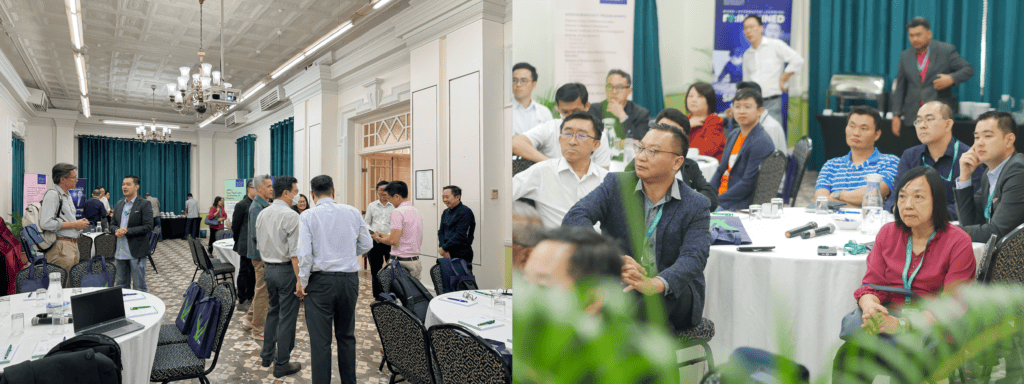
Academics play a crucial role in developing and enhancing artificial intelligence (AI) algorithms, while industry leaders focus on implementing these advancements within the industrial ecosystem.
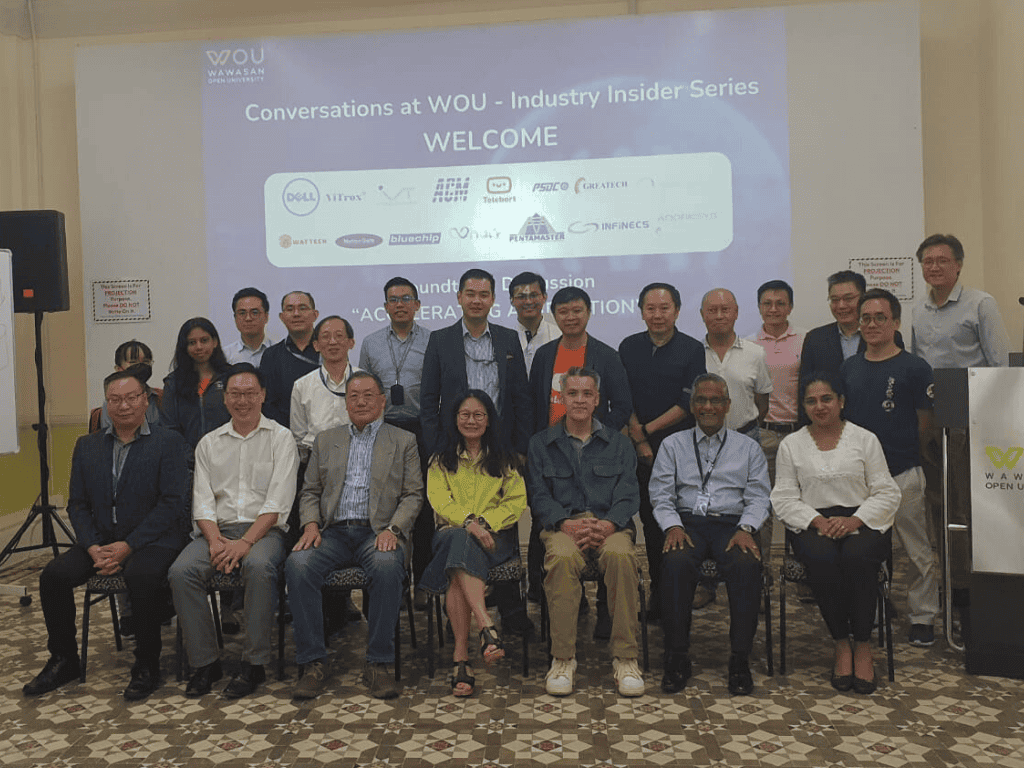
These perspectives were shared by captains of industry and academic leaders during a roundtable discussion on “Accelerating AI adoption in Local Penang Companies” at Wawasan Open University (WOU) on 12 July 2024. The event marked the first edition of the #Conversations@WOU: Industry Insights, an initiative championed by WOU aimed at cultivating dialogue and strengthening capacities in academia-industry partnerships.
Discussions revealed current industry trends, such as the demand for advanced algorithms that offer greater accuracy and speed.
Additionally, industry leaders emphasised the need for talents skilled in AI, ML (machine learning), ANN (artificial neural network), DL (deep learning), and generative AI to enhance business processes and improve internal efficiency. Many were impressed to discover that WOU’s existing programmes, particularly the Bachelor in Software Engineering (Honours) (Application Development), already incorporate these elements through courses like Data and AI Essentials, Statistics for Data Science and AI, R Programming, Machine Learning, Deep Learning, and Reinforcement Learning.
Lim Hean Tatt from Dell Technologies showcased their AI-ready solutions, offering insights on how to initiate AI integration in businesses. According to Lee, the ideal accounts to target are customers who are keen to adopt AI but are new to it and uncertain on starting their AI journey.
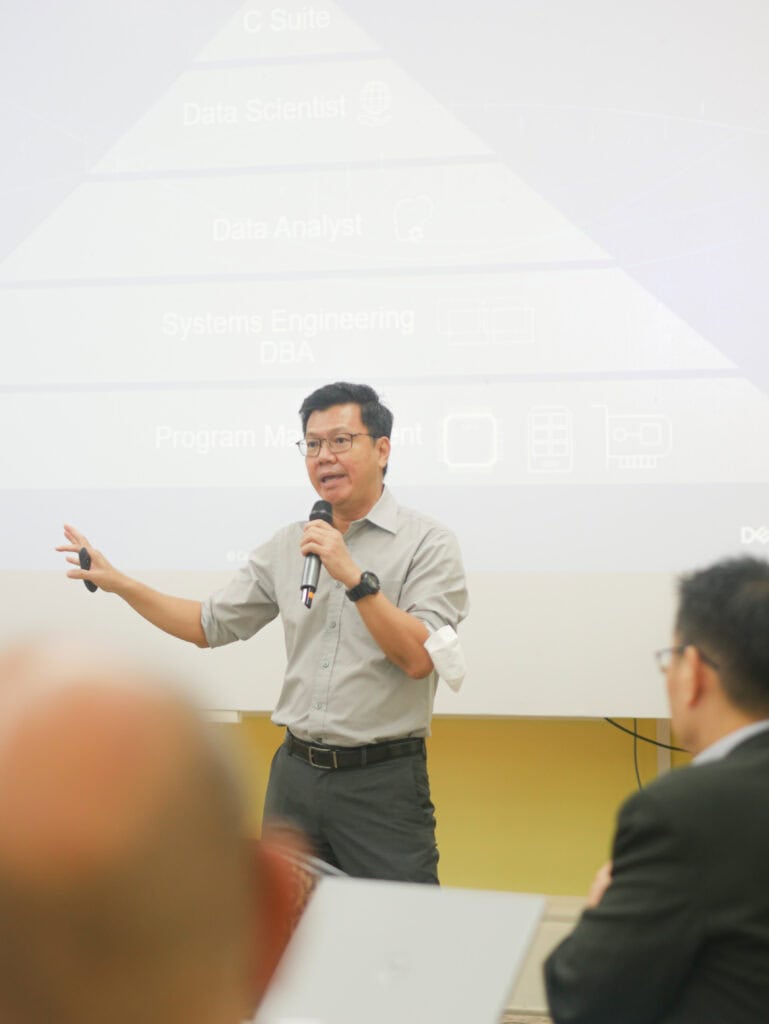
“Engage with your target accounts to understand their state of AI readiness and maturity. For example, find out whether they have a defined AI strategy and a clear understanding on how AI can add value to their business,” he suggested.
He further discussed key barriers to effective AI adoption, including bias, ethics, data and architecture challenges, privacy and security concerns, culture and skills challenges, and technology integration issues. ViTrox Corporation Berhad’s Senior Research and Development Engineer, Lee Yeong Khang introduced their impressive Volta solution, demonstrating the system’s capabilities in ensuring reproducibility.
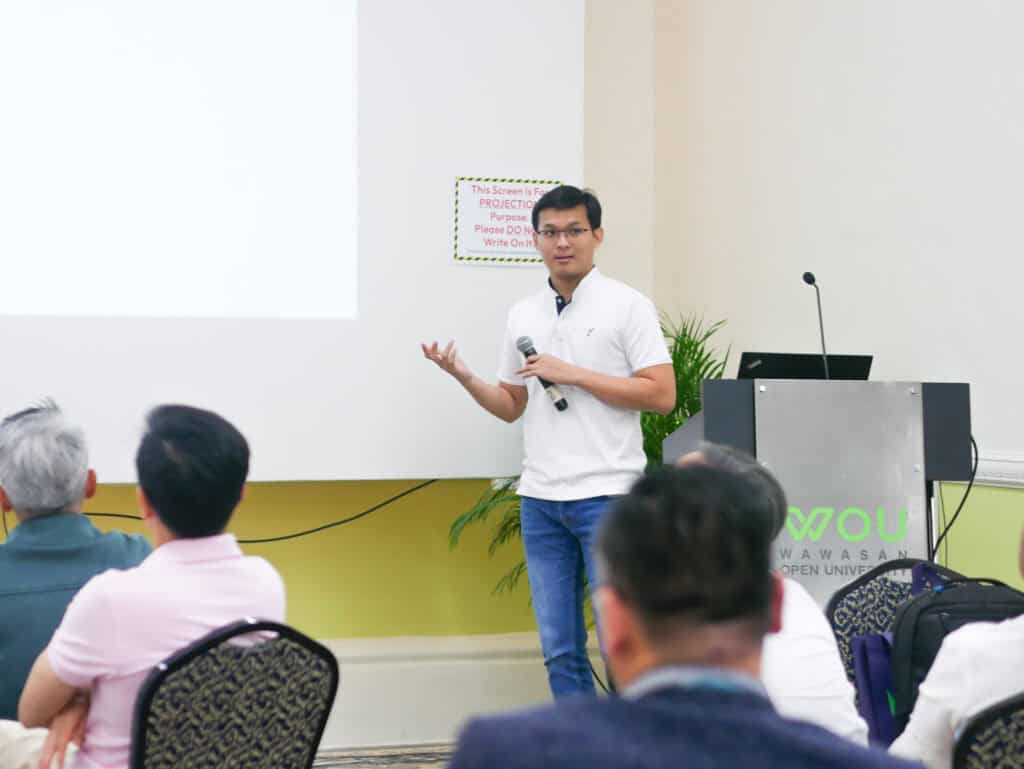
On the motivation behind developing Volta, Lee explained that Volta simplifies system updates and maintenance by allowing users to “just update the data and then following the documentation as provided,” without requiring extensive machine learning expertise.
He added that the feature ensures that knowledge is easily transferable among engineers, making system management more efficient. In his presentation, Chief Operating Officer of IVT System Sdn Bhd, Tan Chong Jin, recommended three steps to harness the transformative powers of generative AI: use widely available tools like ChatGPT, Copilot, and Gemini to boost productivity; integrate generative AI into core operational processes to add customer value; and innovate by using or building generative AI apps on the foundation models to cater to highly-specific needs not addressed by current software or systems.
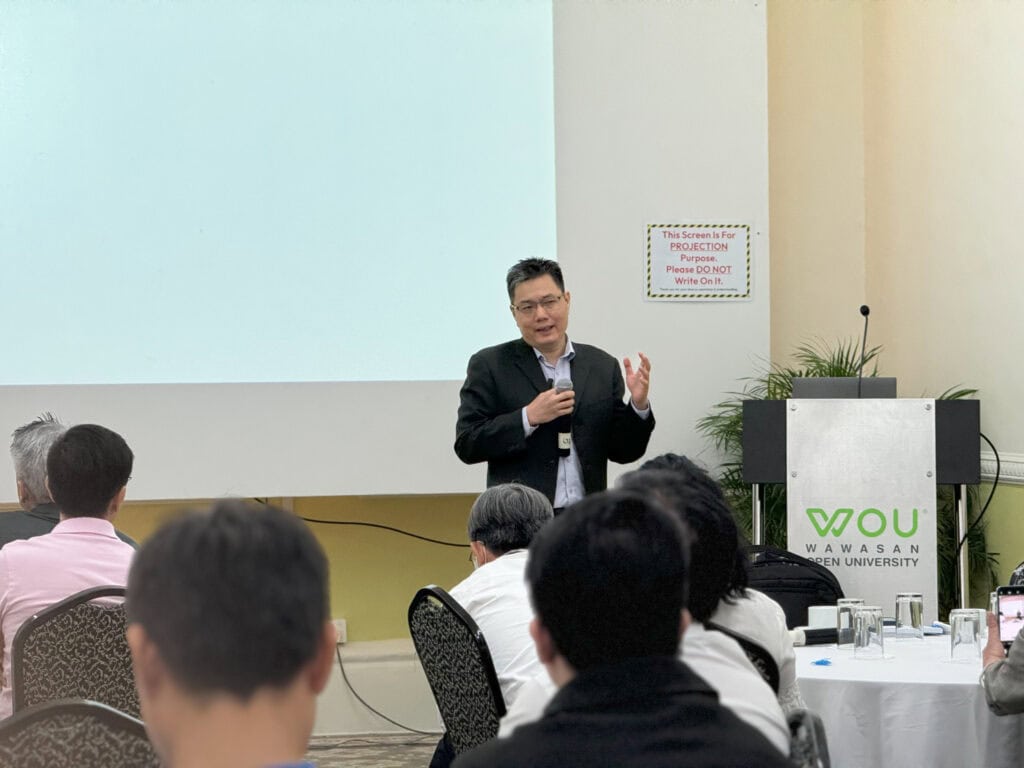
Commenting on the use of AI in education, Tan opined that today’s state of technology will not replace senior lecturers with real-world experience. Instead, he noted, “I would say that the AI tools will come in the form of tutors and teaching assistants that would aid the students after a lecture is over.”
Tan also highlighted the importance of collaborations with Dell, ViTrox, WOU, and the Penang Skills Development Centre (PSDC) to overcome significant barriers in developing generative AI applications. From an academic perspective, WOU Chief Executive and Vice Chancellor Prof Dr Lily Chan underscored the pertinent need to educate young people, including primary school students, about jobs of the future.
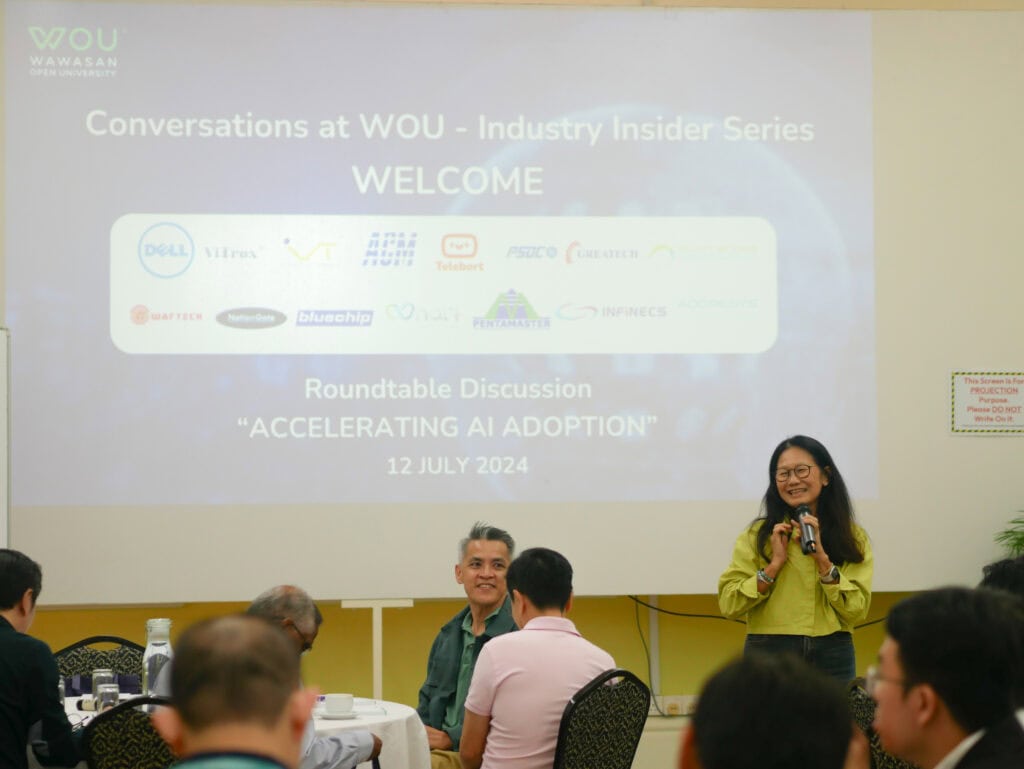
“What do they need to learn? The excitement of what AI is and the opportunities in STEM need to be communicated to the younger generations,” she said, emphasising the need to expand the talent pool of STEM graduates.
The collaborative sharing demonstrated how academia and industry can combine their expertise, with academics handling the initial stages of AI development and industry managing practical application and deployment. Subsequent conversations set the direction for potential academic-industry collaboration to leverage AI in accelerating the learning curve within industries and encouraging educational institutions to invest in AI for talent development.
Among the distinguished leaders present were Dr Hari Narayanan, CEO of PSDC; CK Tan, COO of BlueChip Venture Capital; and SJ Phuah, Founder and CEO of IVT System Sdn Bhd. The invitation-only event was attended by over 20 professionals from various industries and WOU academics.