
Continuing with Wawasan Open University’s #Conversations@WOU industry engagement efforts, we hosted an exclusive dialogue featuring Dr Richard Chang Ru-gin, the “Godfather of China’s Semicon Industry” on 17 August 2024 at The Hall@Homestead. Dr Chang is renowned for his role in establishing Semiconductor Manufacturing International Corporation (SMIC,) China’s largest chip manufacturer and the third largest in the world. The event was co-organised with BlueChip Venture Capital and Waftech Sdn Bhd.
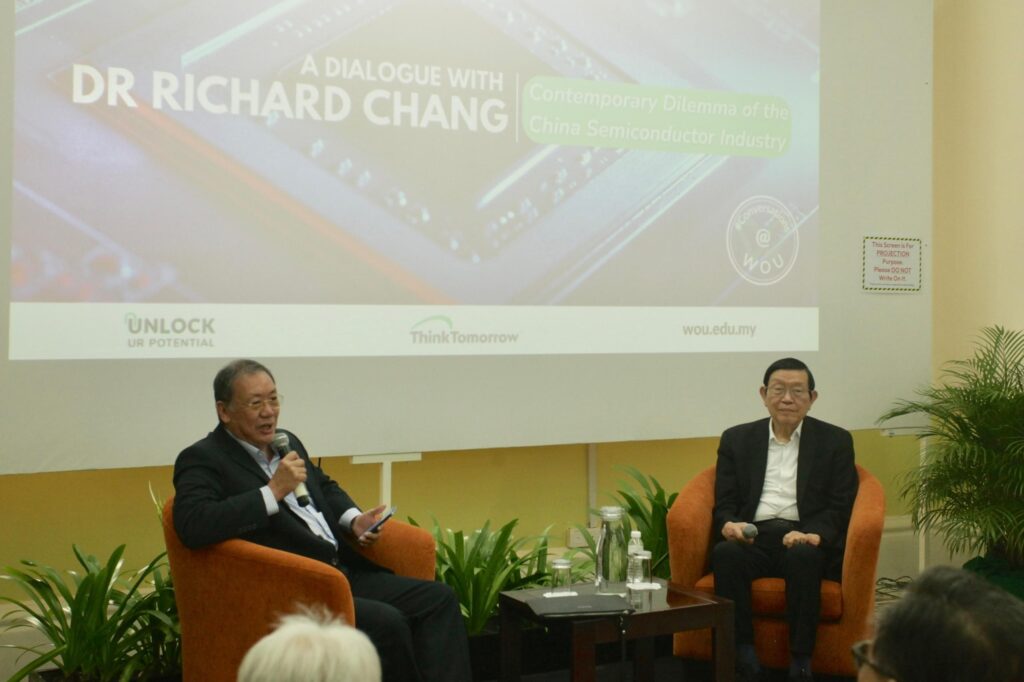
The #Conversation@WOU series reflects WOU’s commitment to advancing knowledge exchange and thought leadership. By bridging academia with industry leaders, WOU is actively cultivating the talent pipeline that is crucial for Penang’s thriving semiconductor and electronics industry. Additionally, WOU also aims to be a vital hub for the industry professionals to share knowledge and experiences, further strengthening the region’s technological ecosystem.
Addressing a full house of Penang’s industry professionals, academics, and investors, Dr Chang shared his profound insights into the evolution of China’s semiconductor industry, offering valuable lessons for advancing Malaysia’s semiconductor sector.
In his insightful talk, Dr Chang offered a raw glimpse into the challenges and obstacles faced by Chinese companies in the tech sector, and how they transformed limitations into opportunities for innovation.
He outlined how Chinese firms have innovatively circumvented U.S. sanctions restricting access to advanced equipment. He detailed China’s industrial adaptability, highlighting the development of alternative techniques such as employing older-generation scanners for sophisticated lithography processes to continue producing advanced chips. “The equipment did not change, but the methodology and the innovation made by Chinese companies made it possible.” Dr Chang views the restrictions as a catalyst for industry independence and self-reliance, despite short-term challenges.
Regarding fab construction, he advises a cautious approach with strategic selection. Rather than chasing ‘bleeding edge technologies’ such as the 3-nm to 5-nm chips, he recommends focusing on market-driven, advanced technologies that are more cost-effective and widely applicable.
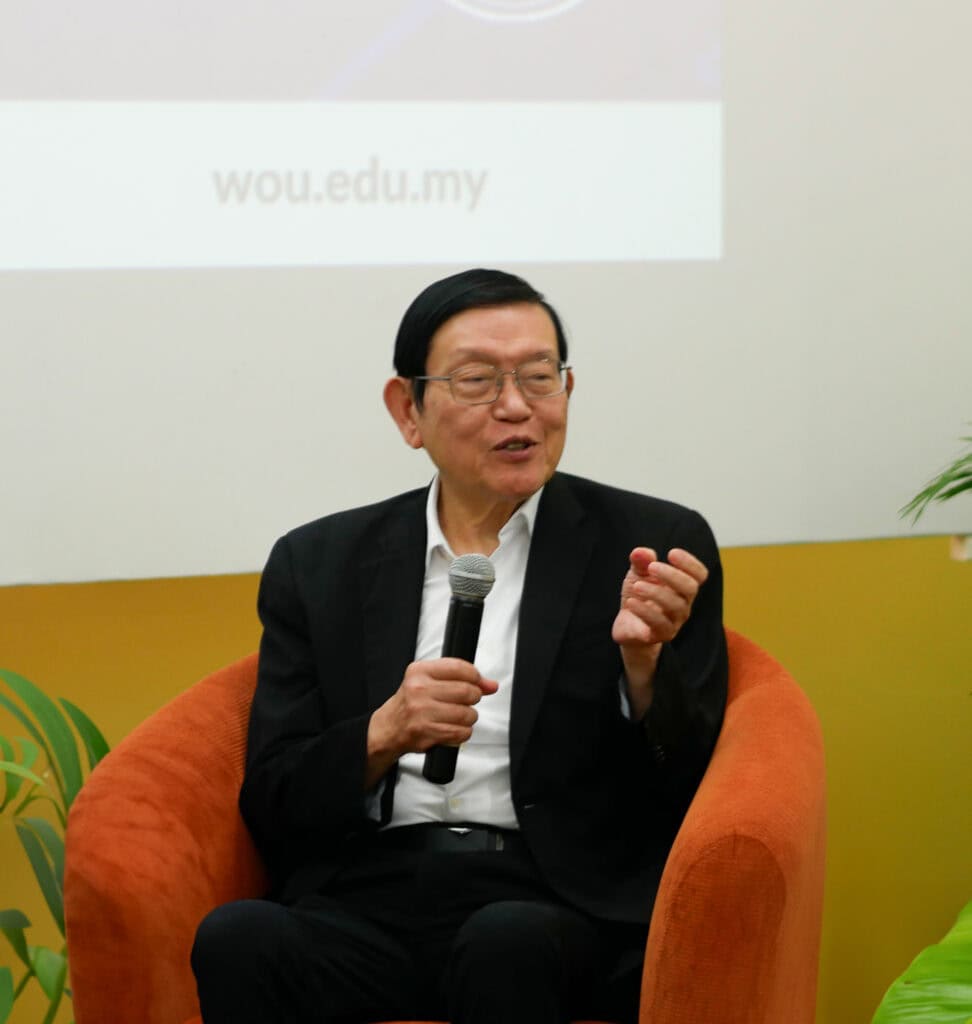
He emphasised the value of collaborative models, such as the Commune Integrated Device Manufacturer (CIDM) approach. At SiEn (Qingdao) Integrated Circuits, a foundry he established in 2018, where they collaborated with 75 design companies. With each company providing 60 designers, totalling nearly 5,000, they were able to significantly boost their design capabilities.
“We don’t have to invest in the backend. They do the design, we do the processing,” Chang explained, adding that they also partner with different companies in assembly testing and module making.
Additionally, Dr Chang encouraged Malaysia to actively pursue technology transfers from China, Japan, Korea, Taiwan, and the United States. He added that once basic technology is acquired, Malaysians can continue to improve it and strengthen their position not only in back-end manufacturing, but in front-end process as well.
“Many Chinese companies will be very happy to work with you. If you want to do the design, China has more than 1,000. More than 90% will say yes”.
Dr Chang stressed the expanding microcontroller unit (MCU) market, particularly in automotive applications. He noted China’s limited 2% domestic supply capacity, necessitating 98% imports. He suggested Malaysia has the potential to meet this demand with strategic partnerships. Additionally, he pointed out that advanced packaging techniques can further optimise chiplet performance, presenting a promising area for Malaysian-Chinese joint ventures in the semiconductor industry. Dr Chang affirms that Malaysia has significant potential to transition from its current role as a service provider to that of a chip developer.
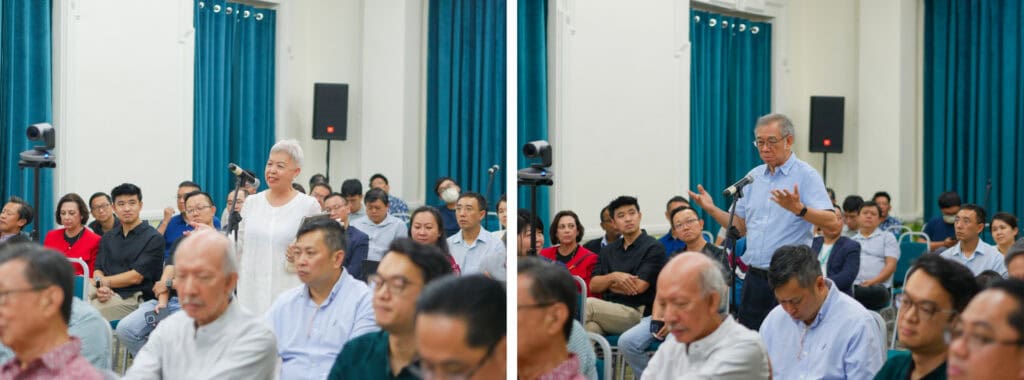
The session concluded with Dr Chang outlining five key factors crucial for Malaysia’s emergence as a global semiconductor powerhouse: leveraging its strategic position in the industry, adopting a step-by-step market penetration strategy, securing reliable technology partners, ensuring strong government support, and obtaining transparent and ethical financial backing from the private sector.
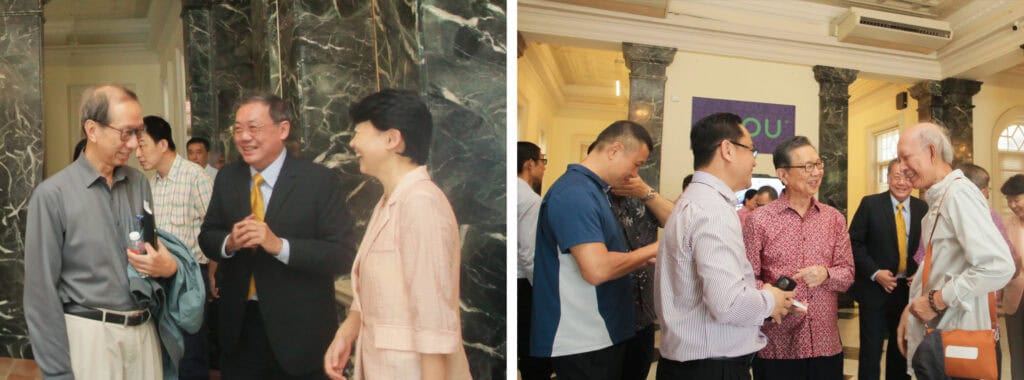
Notable attendees included Chairman of WOU’s Board of Governors (BoG), Tan Sri Dr Koh Tsu Koon; Founder and Chairman of BlueChip VC, Dato’ Seri PY Lai and Chief Executive Officer of InvestPenang, Dato’ Loo Lee Lian. Also present were industry leaders from Penang’s semiconductor companies, including Greatech, Inari, Infinecs, NationGate, Oppstar, Pentamaster, SkyeChip, Starfive, Swiftbridge, Waftech, and others.