
Through the George Town Institute of Open and Advanced Studies (GIOAS) and the participation of its leaders, WOU linked impact investing with the capacity building and talent development needed to translate sustainability goals into practical outcomes.
As sustainable development in Southeast Asia shifts from ambition to implementation, a central takeaway from the recently concluded Sabah Asia-Pacific Impact Investing for Sustainable Development Summit 2026 highlights that lasting regional growth cannot simply be funded or imported. Long-term progress must be built from within by sharing knowledge, building local capabilities, and providing communities with essential digital tools.
Co-organised by Wawasan Open University’s (WOU) George Town Institute of Open and Advanced Studies (GIOAS) together with the Ministry of Tourism, Culture and Environment Sabah, the summit convened more than 300 leaders from government, finance, industry, academia, and civil society at Kota Kinabalu on 13 and 14 July.
It focused on advancing policies for impact investing, mobilising capital for high-impact social and environmental projects, encouraging businesses to adopt responsible models, and positioning Sabah as a living laboratory for innovation and a gateway for global capital into the Asia-Pacific sustainable development ecosystem.
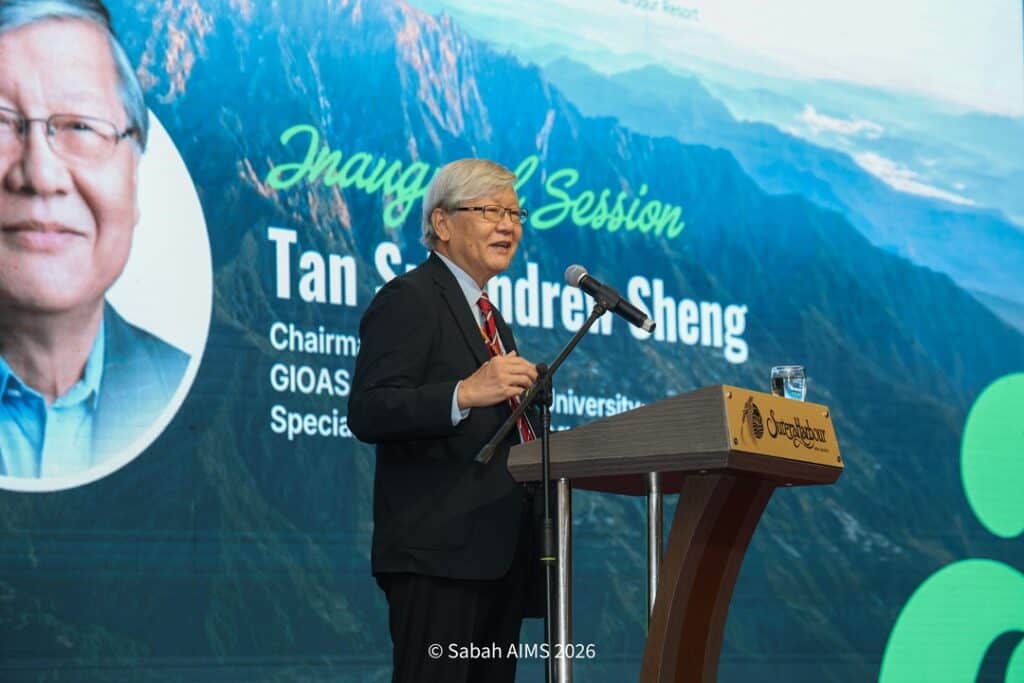
Initiated by Tan Sri Andrew Sheng, Chairman of GIOAS and Chairman of the Wawasan Education Foundation Board of Directors, the inaugural summit served as a dynamic platform to connect investors and policymakers with researchers, businesses, and local project leaders to translate sustainability priorities into viable initiatives with measurable outcomes.
Education as a Component of Public Infrastructure
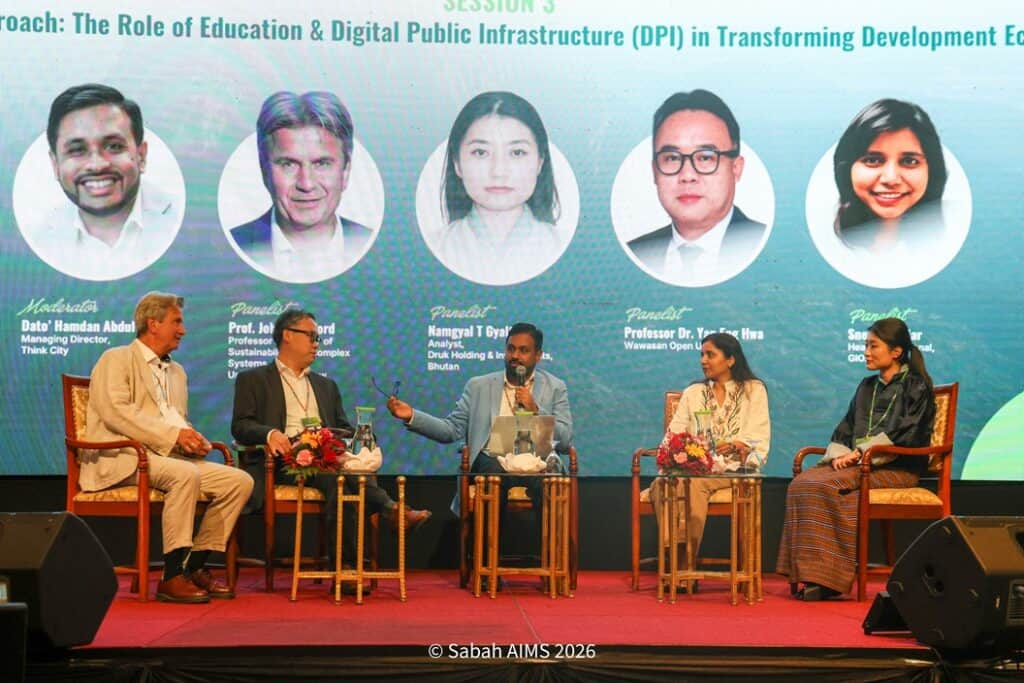
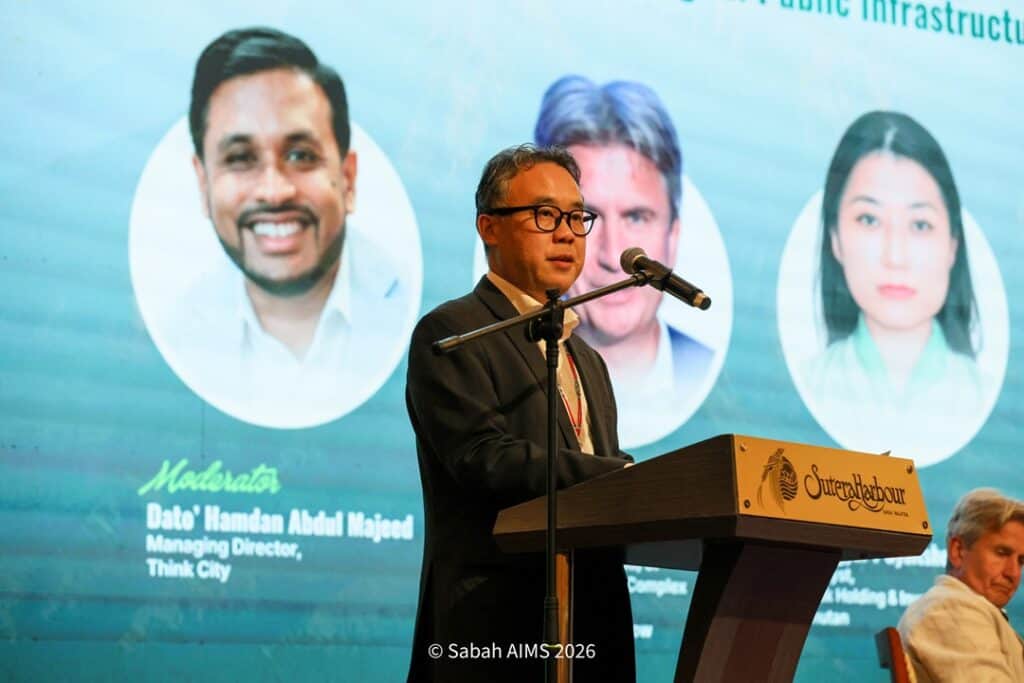
Representing WOU on a high-level panel exploring the role of education and digital public infrastructure in transforming development ecosystems, Professor Ts. Dr. Yap Eng Hwa discussed how open and distance learning (ODL) serves as a vital component of development infrastructure.
While digital platforms can improve communication and data sharing, their real-world success depends entirely on the people using them. From local enterprises to public agencies, users need the digital skills, data fluency, and governance knowledge to interpret information and act responsibly within their communities.
Education closes the gap between having digital tools and using them effectively. Universities can translate research, data, and local evidence into practical training, applied projects, policy insights, and knowledge that enable local talent to move development initiatives forward.
Upskilling Communities Where Development Happens
Prof. Yap also highlighted the relevance of ODL to Sabah, where development initiatives must reach geographically dispersed communities without drawing people away from the places where their knowledge and participation are most valuable.
WOU’s approach combines flexible delivery, technology-supported access, structured learner support, and recognised academic pathways, enabling working adults, public officers, and grassroots leaders to strengthen their capabilities while continuing to fulfil their professional, family, and community responsibilities.
Through the Accreditation of Prior Experiential Learning (APEL) entry pathway, experienced practitioners can also gain recognition for knowledge acquired through employment, entrepreneurship, community leadership, volunteering, and other forms of prior learning.
Preparing the Workforce for an AI-Driven Era
Building a sustainable economy requires professionals who can connect science, policy, and business. Whether launching a renewable energy project, managing sustainable tourism, or developing the blue economy, success depends on an integrated mix of engineering, financing, environmental assessment, and community relations.
These priorities are reflected in WOU’s work in sustainability education, which adopts a multidisciplinary approach integrating artificial intelligence (AI), the Internet of Things (IoT), data, energy systems, environmental impact assessment, green building, advanced materials, and innovation.
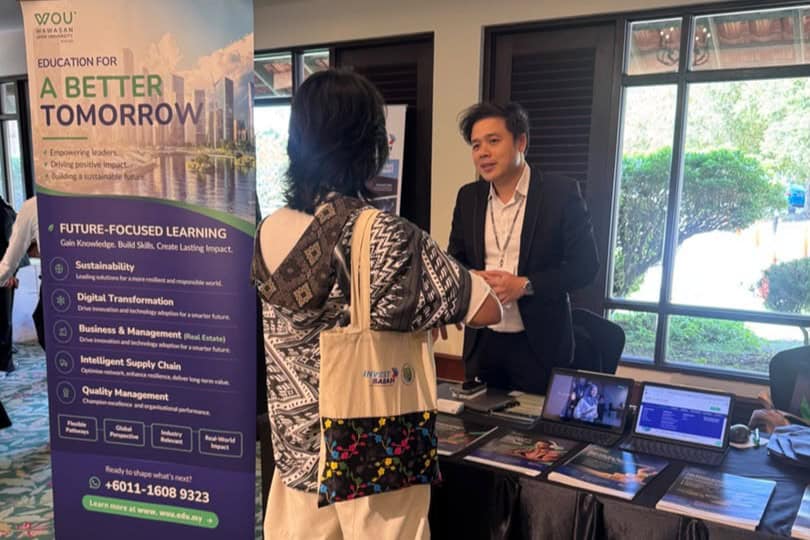
Also present at the summit was WOU’s sustainability expert Associate Professor Ts. Dr. Lee Yong Siang, Deputy Dean of the School of Technology and Engineering Science, who actively engaged with delegates through one-to-one consultations on pathways from professional certification to postgraduate study.
Driving Long-Term Regional Transformation
The summit underscored that regional transformation depends not only on capital, policy, and technology, but also on the people equipped to translate them into action. The range of impact investment opportunities discussed points to a wider role for WOU in supporting regional development through targeted capacity building, applied learning, and talent development.
By strengthening the knowledge, skills, and judgement of professionals and communities, education can help turn investment commitments into locally grounded projects that are effectively managed and sustainable over the long term.