
Climate change is such a global issue that complex interventions, rather than linear ones, are needed. This was the overarching theme of the recent Public Forum on Climate Action, organised by WOU’s George Town Institute of Open and Advanced Studies (GIOAS) held at the WOU main campus on 13 and 14 January 2024.
Chairman of GIOAS, Tan Sri Andrew Sheng, said that instead of linear solutions, holistic, systemic solutions are urgently needed for climate action. He was speaking at a special session focusing on a review of COP28, the 28th annual United Nations (UN) climate summit at Dubai, United Arab Emirates in 2023 and global perspectives on climate action.
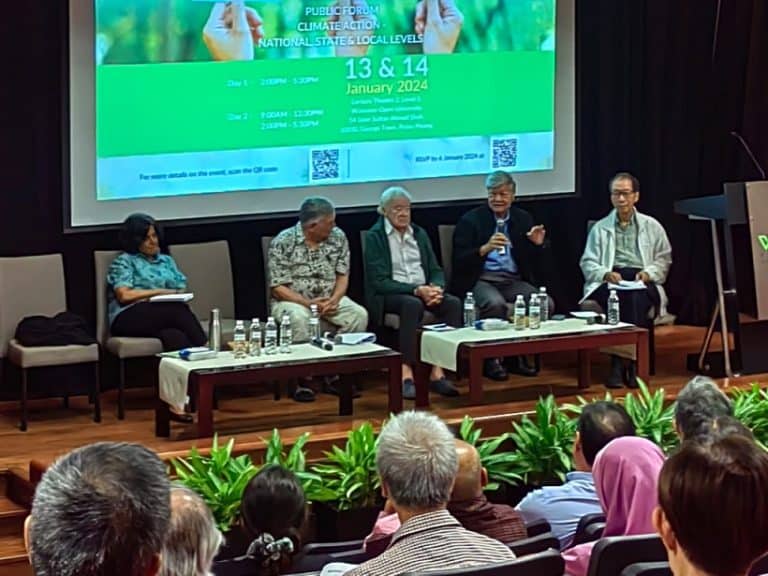
He argued that climate action is about adopting a “business as unusual” thinking, in order to find solutions that best fit unique situations, not just best practices.
“We need to have inclusive conversations at all levels – global, national, state, village – so that we can form a narrative that resonates and inspires change.
“If we weave that narrative into what we should do, what we are doing right, we will start to make that change where we can,” he added.
Head of Programmes at Third World Network, Meena Raman, highlighted several of COP28’s key outcomes, particularly the Global Stocktake, an assessment of countries’ progress in achieving the Paris Agreement goals, the framework for the Global Goal on Adaption on enhancing resilience and strengthening capacity of governments in dealing with climate change and the historic agreement to operationalise the loss-and-damage fund.
Raman also shared about the various global mitigation efforts related to renewable energy, energy efficiency, methane emissions, carbon markets, financing, and a first-time mention of transitioning away from fossil fuels.
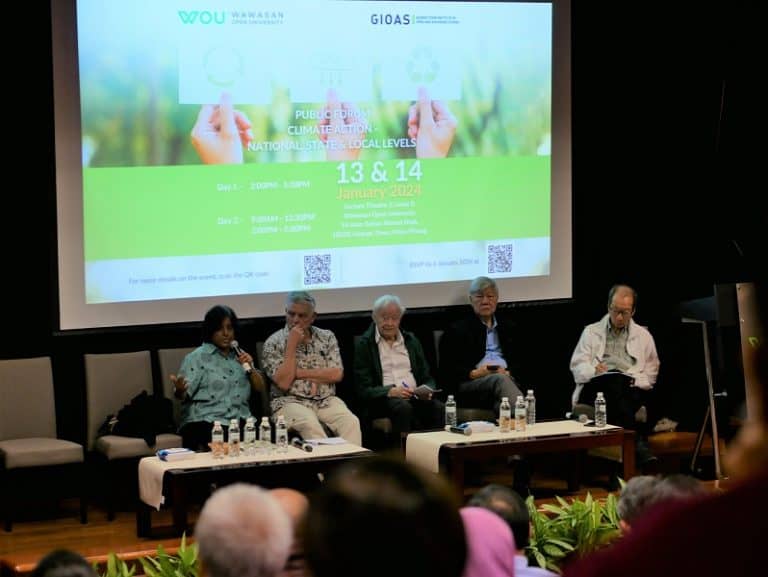
Chairman of the Malaysia International Islamic Financial Centre Leadership Council, Tan Sri Azman Mokhtar, said that the COP platform is required but is not sufficient in addressing climate change.
He emphasised the necessity to work with the international system but also be realistic about the limitations of the multi-lateral platform. Speaking on the concept of ‘climate sovereignty’, Tan Sri Azman cited the tiger conservation project in Pahang’s vast forestland led by the Crown Prince and Regent of Pahang, Tengku Hassanal Ibrahim Alam Shah.
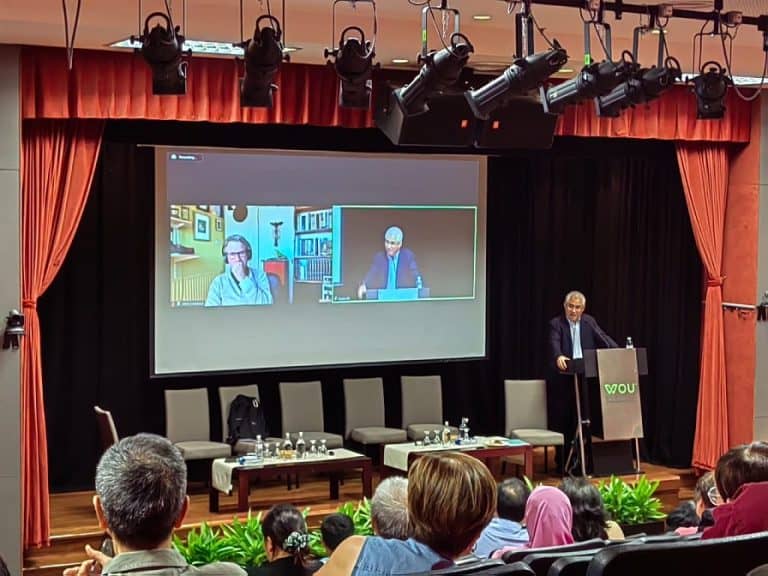
Founder of Para Limes, Jan Vasbinder, said that energy and climate problems are manifestations of extreme complex systems. He argued that science unintentionally created a belief that we can increase our understanding and control of the world we live in.
Mankind’s long term problems began to grow when linear thinking replaced our capability to handle complexity at a human scale, he said.
Vasbinder proposed a shift away from linear thinking and returning to ground level, applying knowledge stored in traditions, communal memories, and cultures.
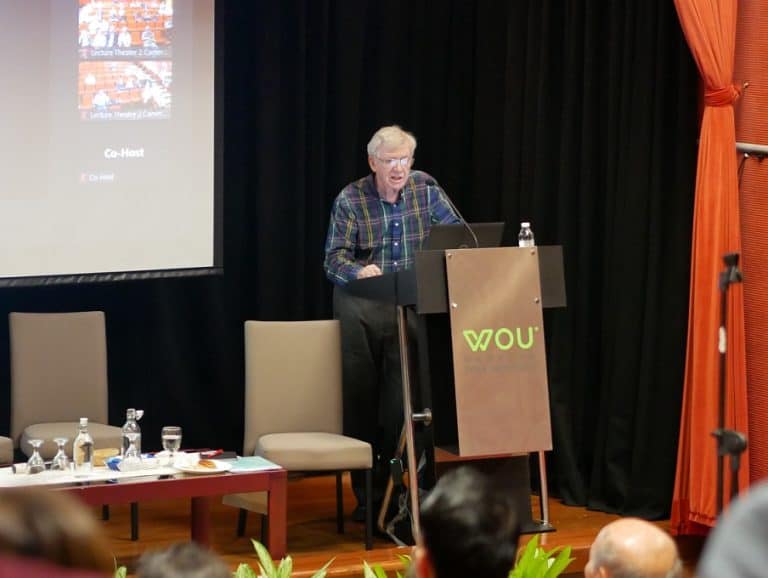
Prof Stephen Oppenheimer from the University of Oxford offered a focused preview of the human and natural causes of global warming, speaking particularly on methane emissions.
Methane, he explained, is a greenhouse gas much more potent than carbon dioxide and is known to warm the planet 86 times more than carbon dioxide over a 20-year period. He said that atmospheric levels of methane are three times higher than the highest before since the Industrial Revolution, and still rising.
Prof Oppenheimer cautioned that the vanishing Antarctic sea ice would cause less sunlight to be reflected and more heat to be absorbed, inevitably leading to a rise in global methane levels.
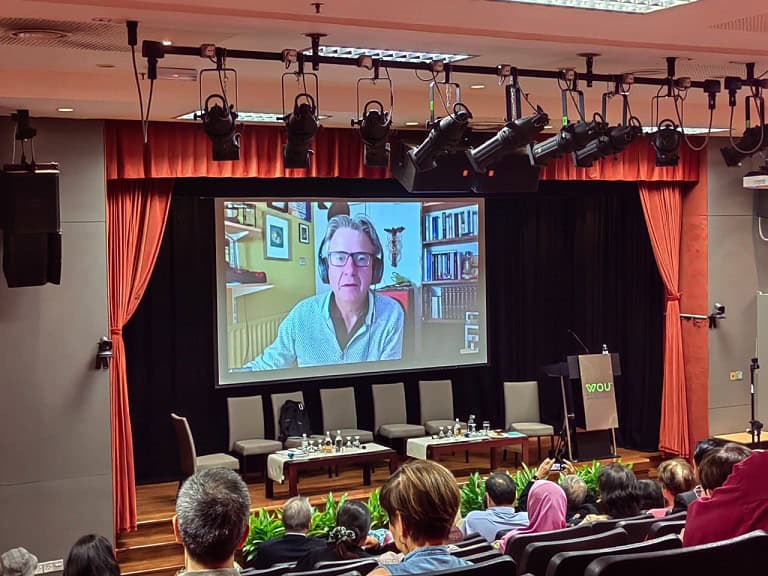
Prof John Crawford from the University of Glasgow talked about the initiatives carried out under the Global Soil Health Programme (GSHP) and the Global Creative Commons platform for farmers.
Speaking via Zoom, he described soil as the most biodiverse and functionally important ecosystem on the planet, contributing between USD 1.5 and 13 trillion annually to the value of ecosystems services.
Prof Crawford called for support for farmers, connecting them to value chains and research organisations in a more transparent and empowering way.
According to Dr Douglas Carmichael, Strategy Consultant at the Institute for New Economic Thinking (INET), the burning of fossil fuels is a real problem.
He pointed out that all the carbon dioxide (CO2) in the atmosphere weighs as much as all the cars in the world, or specifically 100kg of CO2 for a single tank of petrol in a car.
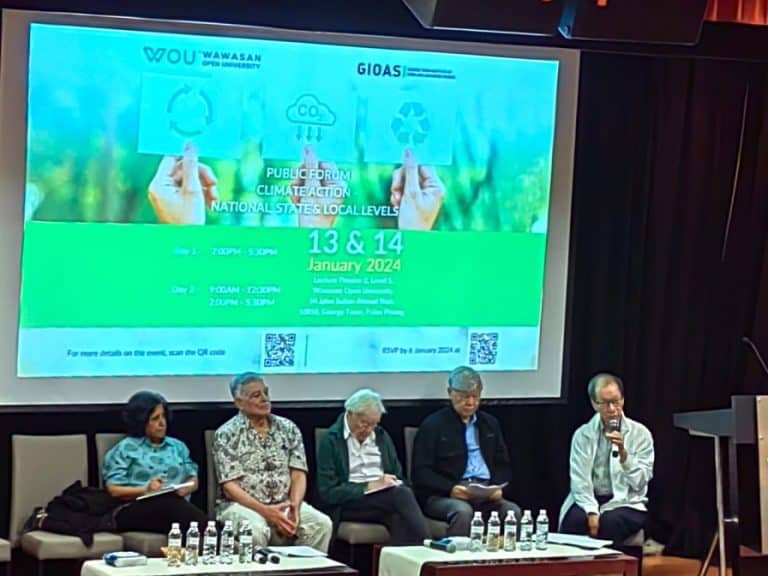
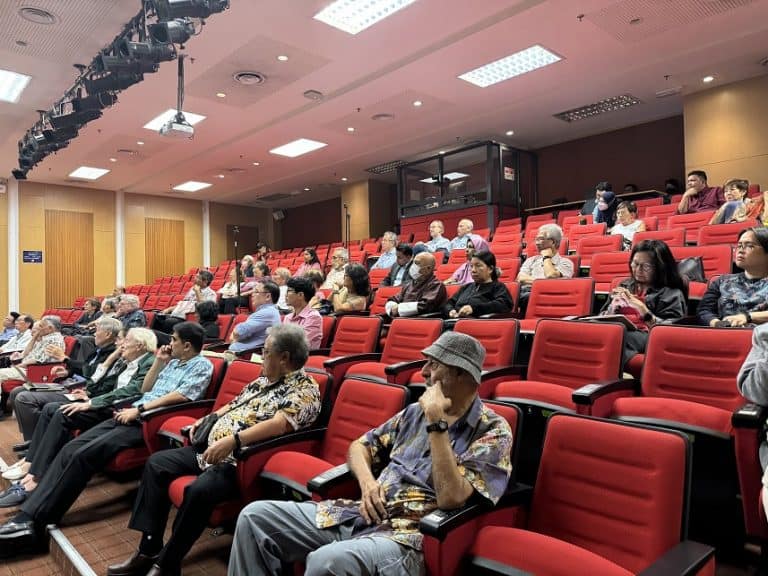
The special forum was moderated by Chairman of WOU’s Board of Governors, Tan Sri Dr Koh Tsu Koon. Over 60 people from local and international organisations representing various sectors attended the two-day conference.