
By Associate Professor Ir. Dr. Arjuna Marzuki*, School of Technology and Engineering Science (STE)
The “New Space” era is redefining global connectivity through the integration of the Internet of Things (IoT) with satellite constellations. This convergence, referred to as Space-IoT, extends communication beyond terrestrial limits and introduces new levels of complexity in system design, reliability, and scalability. It also places new demands on how engineers are trained and how universities and industry collaborate.
Addressing this requires a closer look at three intersecting domains: Space-IoT system design, professional competence, and a more embedded model of university and industry collaboration.
The Space-IoT Ecosystem: Beyond Terrestrial Constraints
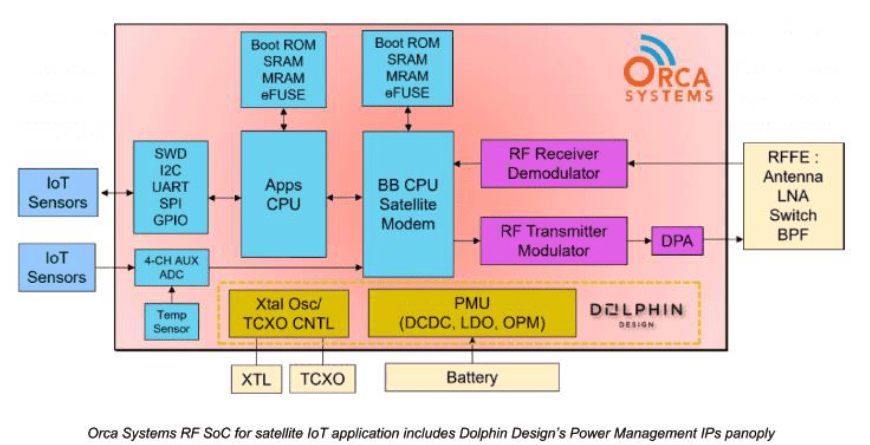
Space-IoT requires specialised technologies to support data transmission under dynamic orbital conditions. The current landscape is a “hybrid” of proprietary and open-source models. For instance, LoRa (Long Range) technology utilises a proprietary physical layer based on Chirp Spread Spectrum, while its network layer, LoRaWAN (Long Range Wide Area Network), remains an open standard. Emerging Doppler Multichannel Spread Spectrum (DMSS) technology further illustrates the bespoke innovations needed for satellite communication.
For the engineer, this environment demands a shift beyond standard Integrated Circuit (IC) design. While academia traditionally focuses on novelty, defined by unique and patentable inventions, the industry prioritises maturity through technology that is proven, reliable, and ready for commercial deployment. The most vital role of the modern university is to bridge this “research gap” by transforming academic novelty into industrial maturity.
Defining Competence in Engineering
In the high-pressure world of semiconductor product development, companies cannot afford to place an inexperienced engineer on a “critical path.” We must, therefore, move away from haphazard, “on-the-job” learning toward a structured path to expertise.
Drawing from recognised professional frameworks such as the UK Standard for Professional Engineering Competence (UK SPEC), competence is defined as the ability to carry out a task to an effective standard, with the right level of knowledge, understanding, skills, and a professional attitude.
Competence in engineering and technology disciplines is structured across five key areas:
A: Knowledge and Understanding
B: Design and Development of Systems, Services, and Products
C: Responsibility, Management, and Leadership
D: Communication and Interpersonal Skills
E: Professional Commitment
To determine the industry readiness of engineering graduates, the progress of competence can be assessed in the following order:
- Knows (Novice): An engineer who “knows” is normally assessed through examination. They have the training, but not yet the experience.
- Knows How: In applying their theory to practice, an engineer demonstrates their knowledge on the work they undertake in the early part of the career. This is often assessed by investigation/inspection (of circuit diagrams, installations, etc, for example).
- Shows How: An engineer who further develops competence and understanding can both demonstrate that to others and show others how to do something.
- Does: An “Expert” who is able to demonstrate competence by doing (“does”). Competence is assessed by peers based on evidence (observed evidence, written evidence, aural evidence).
Registration as a Chartered Engineer (CEng) or Incorporated Engineer (IEng) is open to everyone who can demonstrate this commitment to maintain that competence, work within professional codes, and participate actively within the profession.
Additionally, Competence UK&U (Underpinning Knowledge and Understanding) refers to the UK-SPEC standard requirement used by professional bodies like the IET to assess candidates with exemplifying qualifications for CEng, IEng, EngTech (Engineering technician), and ICTTech (ICT technician) registration.
For those without exemplifying qualifications, they can provide other evidence of UK&U such as formal further learning and work based learning that demonstrates the equivalent level of knowledge and understanding.
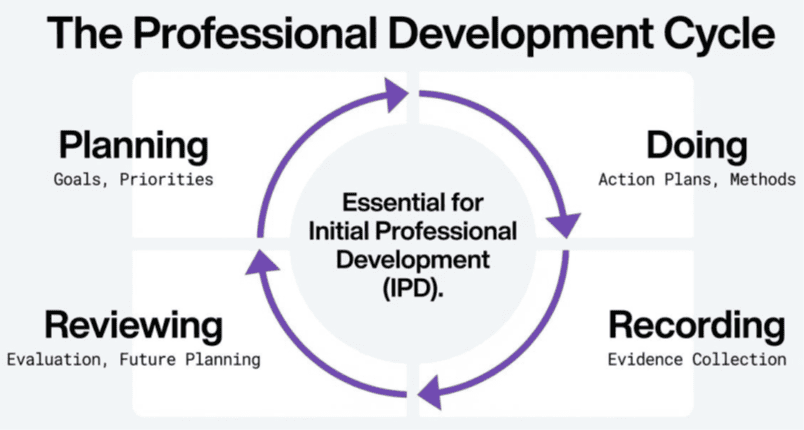
The diagram below illustrates the competence development process early career engineers experience in order to gain the right combination of knowledge, skills, and attitude.
A New Blueprint for Academia-Industry Collaboration
Universities have traditionally focused on knowledge generation and dissemination. However, in fields such as semiconductor design, this alone is insufficient.
Engineering problem solving begins with problem definition. This involves establishing what is known, identifying gaps, and expanding the problem space before converging on solutions. It requires an evidence based and often interdisciplinary approach.
At the same time, industry operates on clearly defined problem statements, tight development timelines, and production constraints. Bridging these two modes of thinking requires universities to move closer to real world engineering workflows, including exposure to IC development cycles and design processes.
To solve the industry’s “problem statements,” collaboration between universities and industry is essential to align academic development with industry requirements. At WOU, our key approaches include:
- Attachments and internships
- Microcredentials
- Apprenticeships and work-based learning
- Co-development of curriculum
- Co-lab/Industry funded laboratories
- Postgraduate scholarships
- Project consultation
- Contract research with postgraduate sponsorship
This model supports not only student development but also alternative pathways for professionals without traditional qualifications, recognising competence through demonstrated capability.
From Parallel Efforts to Shared Outcomes
The university’s primary role is to generate and disseminate knowledge. The industry’s role is to apply that knowledge to create value. When these two spheres overlap, a spin-off culture can emerge to support national innovation.
A more coordinated ecosystem involving government stakeholders such as the Ministry of Higher Education, Ministry of Science, Technology, and Innovation, Ministry of Digital, and the private sector can reduce fragmented efforts and strengthen alignment between research and application.
Research must also demonstrate clear elements of uniqueness, innovativeness, and inventiveness, supported by patent search and positioning. Outputs should be able to articulate how they offer a distinct proposition and how they can address the needs of stakeholders across community, industry, and government. This is critical in moving research towards commercialisation and avoiding repeated development of similar solutions.
In the Space-IoT era, progress depends not only on technological capability, but on how effectively talent, research, and industry needs are aligned within a shared ecosystem.
About the Author

*Associate Professor Ir. Dr. Arjuna Marzuki is attached to WOU’s School of Technology and Engineering Science (STE). He is a Chartered Engineer registered with the Engineering Council UK, a Professional Engineer with the Board of Engineers Malaysia, and Professional Review Interviewer with the Institution of Engineering and Technology. An IC design expert and technology commercialisation advisor, Dr. Arjuna serves as a consultant to several local IC design companies. His expertise and research interests span microelectronics and semiconductor design, including field sensors, biomedical electronics, analog-based artificial intelligence accelerators, energy harvesting, and the Internet of Things.