
By Associate Professor Ts. Dr. Andrew Tan*, School of Digital Technology (DiGiT)
Earlier in March, I had the privilege of delivering a keynote address at the 2nd International Conference on Multidisciplinary Breakthroughs and NextGen Technologies (ICMBNT 2026) in Bali, Indonesia, where I explored the transformative opportunities and pressing ethical challenges shaping the future of artificial intelligence (AI).
The central argument was straightforward: we are no longer in the early stages of AI experimentation. We are at an inflection point where adoption is widespread, expectations are rising, and the consequences of how we deploy AI are becoming more visible.

AI is often described as “the new electricity”—a general-purpose technology that will underpin nearly every sector of the digital economy.
The analogy is not an exaggeration. What is different, however, is the speed at which AI is diffusing across industries, organisations, and everyday workflows.
Unlike electricity, which took decades to achieve global reach, AI is scaling at an exponential pace, driven by cloud infrastructure, accessible tools, and growing demand for automation.
AI Adoption in Malaysia
According to recent data from McKinsey, global AI adoption has seen a dramatic shift. In 2017, AI adoption required significant investment in infrastructure, talent, and integration. By 2024, 72% of organisations worldwide had adopted AI in at least one business function.
Malaysia’s position within this landscape is notable. Among knowledge workers, 84% are already using AI for productivity, well above the global average of 75%.
At the organisational level, 88% of employers consider AI essential for competitiveness, while 62% indicate they would not hire candidates without AI-related skills.
Practical AI in Traditional Sectors
Much of the public discourse on AI remains centred on high-tech applications. Yet some of the most instructive case studies come from traditional industries, where constraints are tighter and the margin for error is smaller.
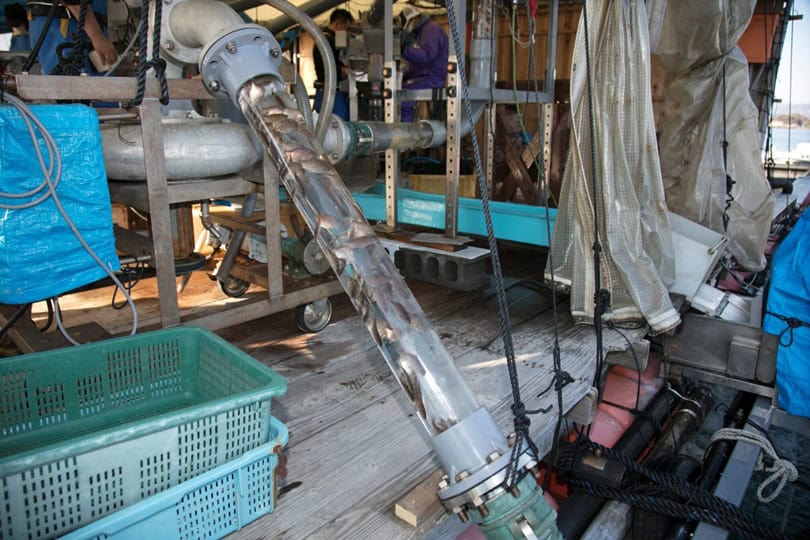
In Japan’s fisheries sector, AI is being used for fish sorting, quality control, and predictive analytics. These systems have significantly improved operational efficiency while reducing reliance on manual inspection.
Similarly, in India’s agricultural sector, AI-driven precision farming is enabling farmers to optimise water usage, predict crop yields, and manage resources more sustainably.
These interventions have led to measurable gains in productivity while lowering operational costs, demonstrating that AI can deliver both economic and environmental value.
Empowering SMEs for AI Integration
Across ASEAN, small and medium enterprises (SMEs) are also seeing tangible benefits. In manufacturing, AI-based inspection systems have improved defect detection accuracy by up to 30–40%. In logistics, route optimisation has reduced delivery times by approximately 25% and operational costs by 15%. In aquaculture, AI-driven monitoring has lowered feed costs by 20% while increasing yields by 15%.
For SMEs in Malaysia and neighbouring economies such as Singapore and Indonesia, AI adoption across sectors including engineering, e-commerce, telemedicine, and logistics has translated into improved testing accuracy, more efficient delivery processes, and lower operating costs.
A 2024 Deloitte survey further indicates that 58% of SME revenue in Malaysia is already linked to digital platforms, underscoring a strong foundation for the next phase of AI integration.
However, moving from a basic digital presence to meaningful AI adoption requires a more deliberate and structured approach.
The starting point is identifying high-impact use cases, particularly areas where AI can deliver immediate value, such as automating routine customer interactions through chatbots or improving demand forecasting.
This must be supported by stronger data practices. SMEs need to move beyond fragmented data collection towards structured, accessible datasets, leveraging tools such as Google Analytics, Tableau, or Power BI to generate usable insights.
Equally important is collaboration. Rather than building capabilities in isolation, SMEs can accelerate adoption by tapping into government initiatives such as the Malaysia Digital Economy Corporation (MDEC) digitalisation programmes, as well as partnerships with AI solution providers and local startups.
Capability building remains the critical enabler. Organisations that invest in upskilling their workforce to understand and work alongside AI systems can achieve productivity gains of up to 30%, transforming their workforce into one that is AI-enabled rather than AI-displaced.
Importantly, adoption does not need to begin with large investments. Starting small with tools such as chatbots, customer relationship management (CRM) systems, or marketing automation platforms allows SMEs to build confidence, demonstrate value early, and scale progressively.

Where Innovation Outpaces Governance
While the opportunities are substantial, the ethical challenges are equally significant and increasingly urgent. As we race toward this AI-driven future, we must not let our speed outpace our ethics.
Algorithmic bias remains one of the most visible risks. There have been real-world instances where AI-driven hiring systems systematically disadvantaged certain groups, highlighting how biases in training data can translate into discriminatory outcomes.
Data privacy is another pressing concern. Cases involving large-scale data scraping for facial recognition illustrate how AI capabilities can outpace existing regulatory frameworks, raising questions about consent and surveillance.
There is also the critical issue of transparency, or the “black box” effect. In the financial sector, we have seen AI systems reject loan applications with little to no disclosure regarding the underlying rationale.
The broader societal implications are equally stark. This includes the large-scale job displacement within manufacturing and administrative sectors brought about by rapid automation.
Furthermore, the question of accountability remains legally murky; when an autonomous vehicle malfunctions with fatal consequences, the industry still struggles to define where the software’s “error” ends and human or corporate responsibility begins.
These challenges point to a fundamental imbalance: while AI innovation is accelerating, ethical and regulatory frameworks are struggling to keep pace.
Beyond Technology: A Question of Intent
AI is not inherently good or bad. Its impact depends on how it is designed, deployed, and governed. True leadership in this AI era requires the public and private sectors to invest in governance, ethics, and human capital to ensure that this adoption is responsible and sustainable.
If AI is indeed the new electricity, then we must pay equal attention to building the grid, including standards, safeguards, and systems of accountability that ensure its benefits are widely shared.
The future of AI will not be determined solely by technological breakthroughs, but by the choices we make about its use.
About the Author

*Associate Professor Ts. Dr. Andrew Tan is Dean of the School of Digital Technology at WOU. His expertise and areas of research span a wide range of fields, including data science, digital heritage, e-tourism, extended reality, gamification, information retrieval, mobile computing, and technology-enhanced education. He has published widely in reputable journals including Sustainability, Telecommunication, Electronics, Journal of Medical Systems, Multimedia Tools and Applications, and Multimedia Systems, among others.