
By Professor Ts. Dr. Yap Eng Hwa*
When we hear the term “smart manufacturing,” the first thing that comes to mind is often robots working in factories. Yet this is only part of the picture, as smart manufacturing encapsulates much more than automated robots alone.
According to the International Federation of Robotics (IFR), 542,000 industrial robots were installed in 2024, more than double that of 10 years ago, with Asia accounting for 74% of these new deployments. Globally, about 4.66 million units were in operational use.
These numbers raise many questions, primarily whether more robots mean more intelligence in the factory.
The answer to this is definitely not always affirmative, as a robotised enterprise is not necessarily always a competitive and smart one. It can be inflexible and slow, be energy inefficient, be susceptible to various manufacturing risks and supply chain disruptions or create more challenges rather than synergies where systems need to work together.
Thus, having more robots is not the ultimate goal, but rather part of the process and one of the enablers that makes a broader whole-system transformation of the entire future economy possible.
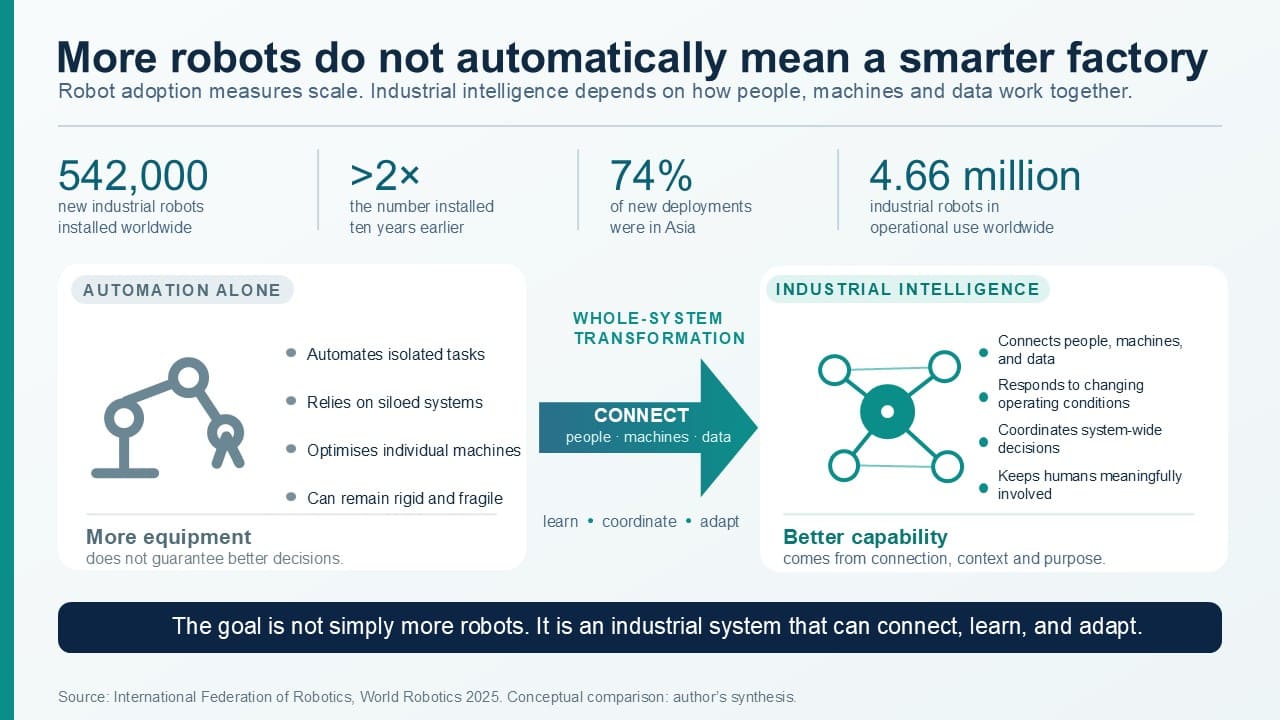
What makes automation something more than just machines working unmanned in a factory? It is a combination of factors that makes it possible to go beyond isolated applications and utilise emerging technologies such as the various types of artificial intelligence (AI) and digital twin technologies to enhance operations.
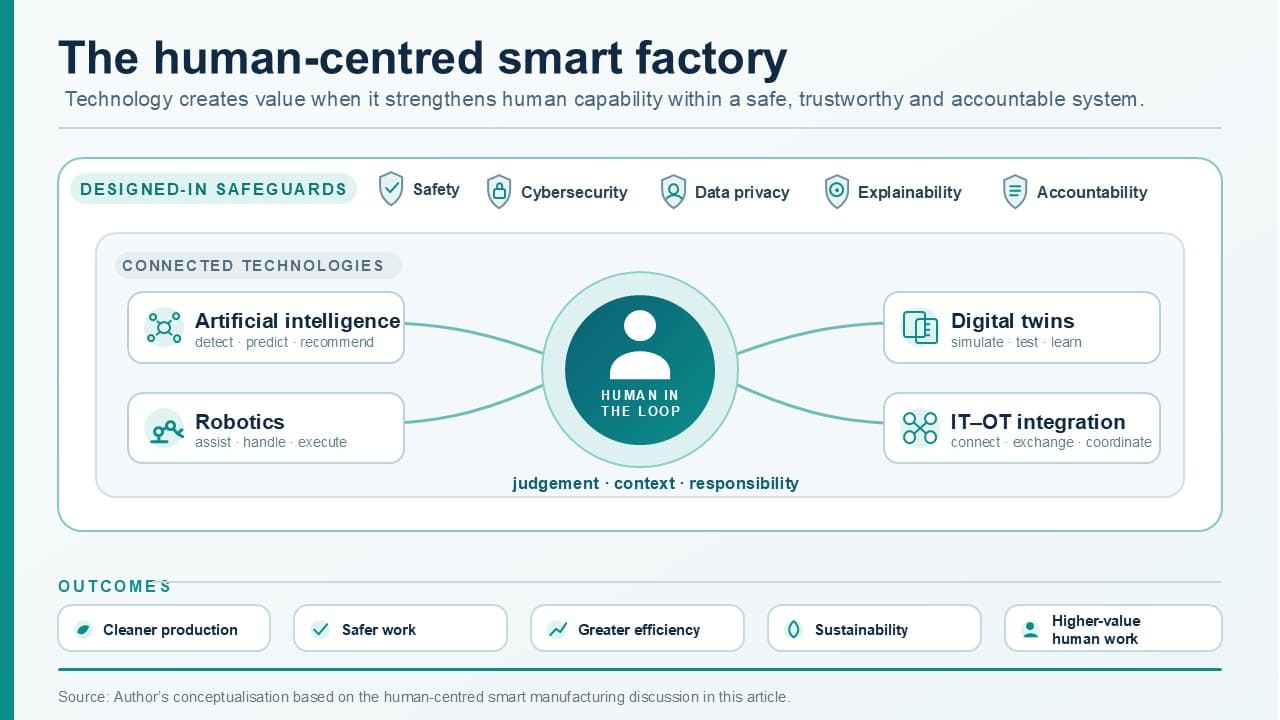
For example, analytical AI can identify defects, recognise process drift, and predict equipment failure before breakdowns occur; generative AI can assist engineers in understanding technical documents, generating simulations, and enabling operators to communicate with and control machinery through language and vision; while agentic AI can enable machinery to operate within narrow parameters of autonomy.
Additionally, digital twins enable manufacturers to experiment with layouts, operation schedules, and control functions within a copy of the production environment. which reduces the risk of implementation errors.
The convergence of information technology (IT) and operational technology (OT) allows for greater exchange of data between sensors, systems, models and business processes, supporting continuous improvement. These capabilities are unified by one overarching theme that makes them differentiators in automation, that is the ability to fulfil a particular need related to human capabilities.
That is also why the International Federation of Robotics highlighted AI-driven autonomous systems and the convergence of IT and OT as two of the leading robotic trends in 2026, whereas the World Economic Forum emphasises the role of end-to-end intelligence, human collaboration, and sustainability as global forces shaping the future of industry.
Although it is evident that technologies such as AI or robots can make production processes more effective and efficient, one cannot simply ignore the critical question of the human role in the arena of innovation.
For example, if an AI system provides a recommendation for improving a particular process, it is necessary to examine the specific context for its advice, assess the suitability of the recommendation within the limits of the company, and determine the parties responsible for its implementation.
That is to say that although a given robot may demonstrate excellent results theoretically and during trial operation, it may fail due to the challenges of production variability, maintenance issues, supply-chain constraints, and other factors in reality.
These complexities and details should be taken into account when designing smart systems because issues such as cyber security, data privacy, and human health and safety are considered integral parts of the technology or system.
One should also not forget that intelligent systems should be designed to help humans rather than replace them in the workplace. Robots and artificial intelligence should assist humans in taking over the most tedious, dangerous, and physically demanding tasks so that people can focus on their creative potential and higher-level tasks.
Consequently, this calls for an appropriate reprofiling of employees and the reconsideration of human workers’ responsibilities. A truly smart factory should be clean, safe, efficient, and most importantly human-in-the-loop (HITL) -ready.
The main question to ask is not whether these industrial transformations will reach Malaysia, as it is already underway, but rather, what kind of value Malaysia will create and garner from it.
In 2025, the country recorded RM131.3 billion in approved manufacturing investments across 1,354 projects, with approved foreign investment contributing RM100.6 billion, or 76.6% of the total. These projects are expected to create 109,950 jobs, with almost half comprising of managerial and technical positions.
This is a strong confidence booster for Malaysia, but capital and new facilities alone will not move the country up the global value chain.
Furthermore, the launch of AI Malaysia in July 2026, as the core entity responsible for implementing the National AI Action Plan 2026–2030, provides a clearer mechanism for accelerating AI innovation, transformation, and responsible AI adoption across the nation.
Nevertheless, the success of these ambitions must ultimately be measured on the ground; in Malaysian small and medium enterprise (SME) shop floors, industrial production lines, and local businesses.
Can our SMEs adopt intelligent technologies into their workflow? Can our universities and industries develop the talent and applied research these investments require? And can Malaysia translate foreign participation into stronger domestic suppliers, locally owned intellectual property, and lasting technological capabilities?
Our ambition should not be limited to simply building factories and hosting foreign multinational corporations, but to transform Malaysia into a modern nation that plays a critical and integral role in the global supply chain.
For us in Penang, this industrial evolution occurred right at our doorstep. Our story began in 1972, when Malaysia’s first free trade zone was established in Bayan Lepas, attracting eight multinational companies to set up operations here.
This laid the foundation for the growth of a vibrant ecosystem of engineering capabilities, suppliers, and research institutes that meet international standards.
Manufacturing contributed 47.3% of Penang’s Gross Domestic Product (GDP) in 2025. Between 2016 and 2025, Penang also recorded a remarkable RM214 billion in approved manufacturing foreign direct investment (FDI), representing 27% of total approved manufacturing FDI in the country.
But Penang’s story is not over yet. In June 2026, MKS opened the first phase of its Penang Complex 1, which is part of a larger investment to produce wafer fabrication equipment, with more than RM400 million in investments slated for the state, with over 1,000 new jobs to be created once the project is completed. In the same month, Galatek opened its first manufacturing plant in Penang, specialising in AI-enabled automation and semiconductor equipment, as well as life-science technologies.
While this is all very impressive, the next question for us is whether our local researchers, universities, SMEs, and local talent can play a role in designing, developing, integrating, and owning these solutions.
Penang has already demonstrated its ability to excel in the global ecosystem. Now, let’s think about how we can turn our global presence into something even better for Penang.
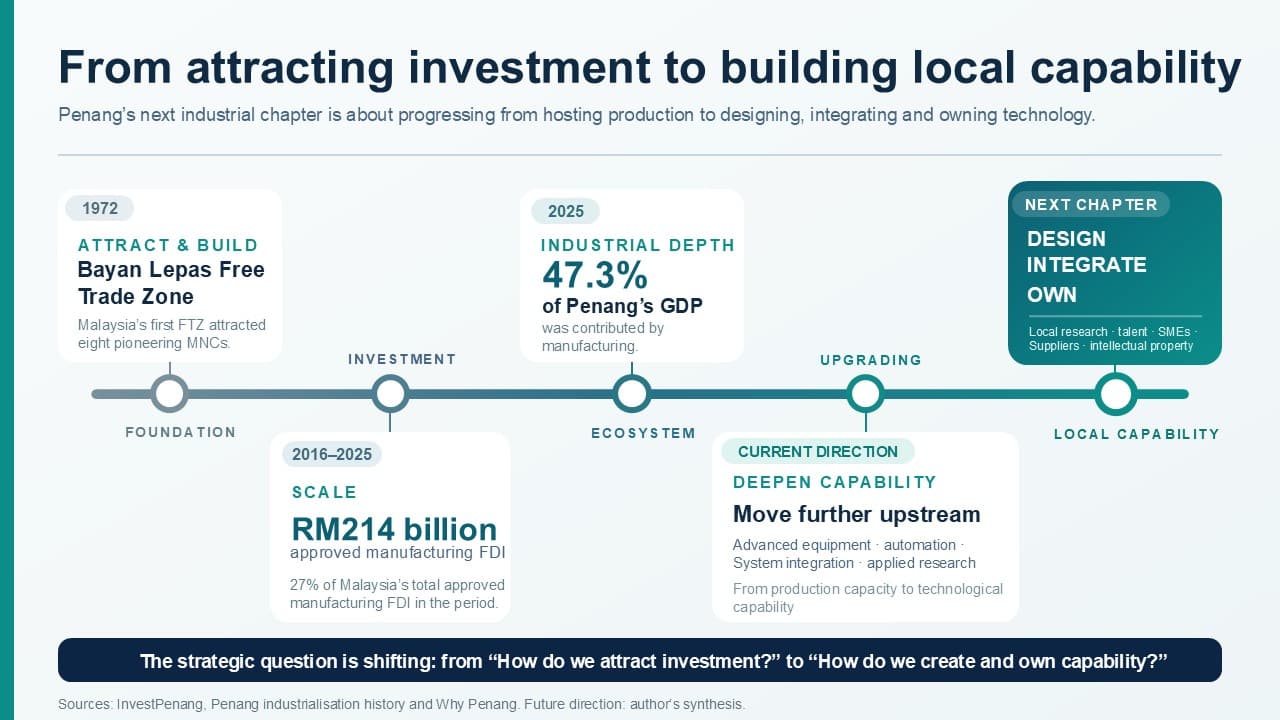
However, investment alone does not automatically translate into industrial intelligence and the ability to build local capacity. To convert investment into capability, we need to think through this growth process, moving from asking what technology we can acquire to asking what problems it should solve.
How can AI cope with varying products made from different materials processed in different ways? How can digital twins and equipment from different manufacturers interact without locking manufacturers into isolated systems? How can one make robot arms both safe and flexible?
How can SMEs adopt new technologies while still getting value out of their investment? How can production be greener?
Such issues go well beyond technology to questions of business models, education and training, governance, and sustainability, as well as their implications for public policy.
This is where universities have a critical role to play :connecting different groups working across these priorities, testing ideas in practice, and providing a focal point for the sharing of knowledge and practice in the country.
This is not something a single company or academic institution can achieve on its own. A process of collaborative analysis, with comparison of evidence and constructive critique, will be needed to generate practical approaches that address a range of issues.
This is why the time has come to bring these discussions together. The 4th International Conference on Intelligent Manufacturing and Robotics (ICiMR) 2026, organised by Wawasan Open University in collaboration with Sunway University, Xi’an Jiaotong-Liverpool University, and Universitas Muhammadiyah Sumatera Utara, will be held at WOU’s Penang main campus on 3–4 November 2026.
The conference provides an opportunity for researchers, industry experts, and practitioners to exchange knowledge across intelligent manufacturing, robotics, AI, digital twins, sustainable production, advanced materials, human robot collaboration, governance, education, as well as discuss experiences in SME technology adoption. Importantly, it also serves as a platform to examine how emerging ideas can translate into actual manufacturing applications that create transformative, sustainable, and socially responsive industries.
The ideas generated through these conversations can potentially make a difference in shaping the next era of manufacturing, globally, and particularly in Penang and Malaysia.
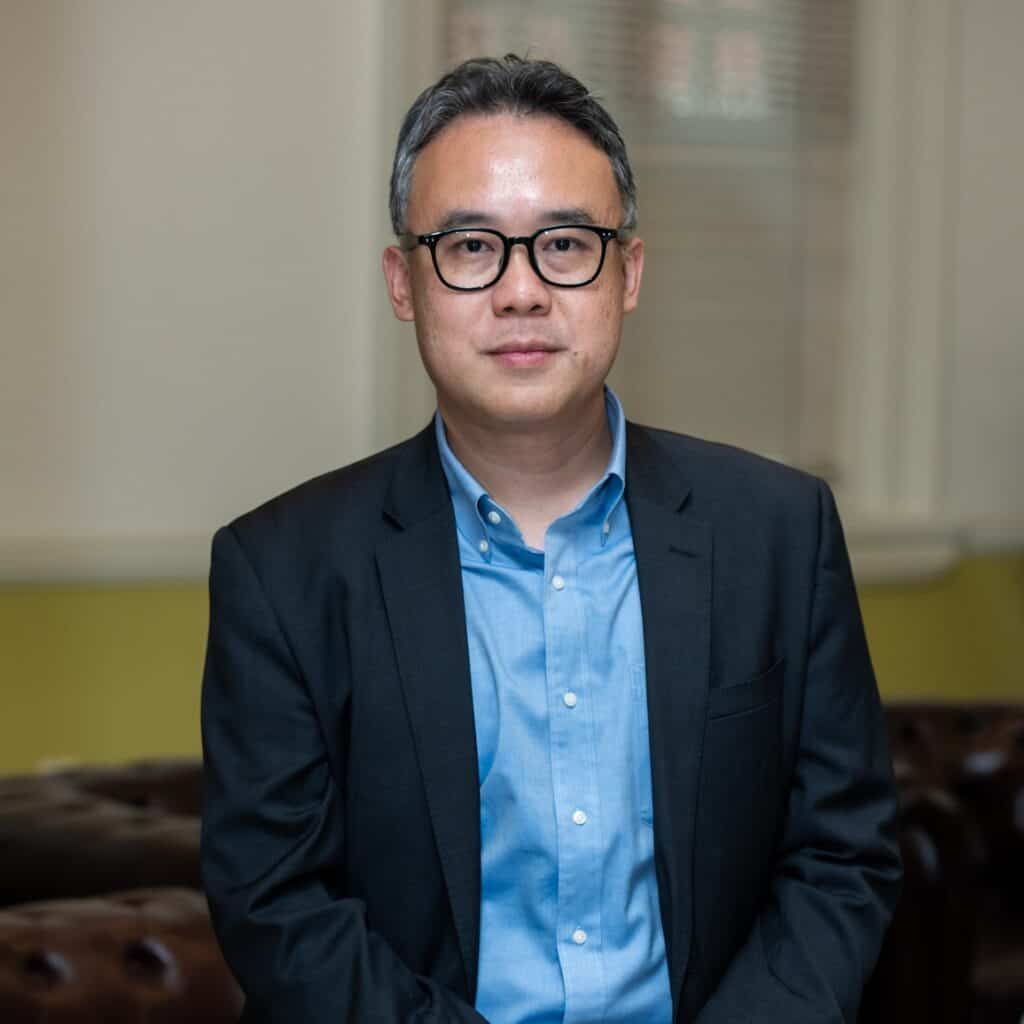
Professor Ts. Dr. Yap Eng Hwa, Chief Executive and Vice-Chancellor of Wawasan Open University (WOU), is trained in marine technology and mechanical engineering, with research interests in energy systems, sustainability, and complex systems analysis. He brings a systems thinking approach to his leadership of WOU and champions open and distance learning to advance equitable access to education. His thought leadership also explores how higher education institutions can continually evolve in response to technological, social, environmental, and workforce changes in an increasingly interconnected and AI-enabled global landscape.
ICiMR Call for Papers
Abstract submission deadline: 15 August 2026
Full paper submission deadline: 15 September 2026
Submissions should be in the form of either a full paper for inclusion in the Scopus-listed proceedings or a 300-word abstract for oral presentation at the conference (without inclusion in the proceedings).
For more information, visit www.wou.edu.my/academia/icimr-2026/