
Malaysia’s move toward smart manufacturing and Industry 5.0 is creating a growing demand for engineering expertise. Organisations need skilled professionals capable of integrating complex systems, while TVET-trained technicians need structured pathways to advance into technologist and engineer roles.
As Malaysia advances further into the front-end of the global tech value chain — from advanced integrated circuit (IC) design to smart manufacturing — the demand for engineering expertise continues to intensify.
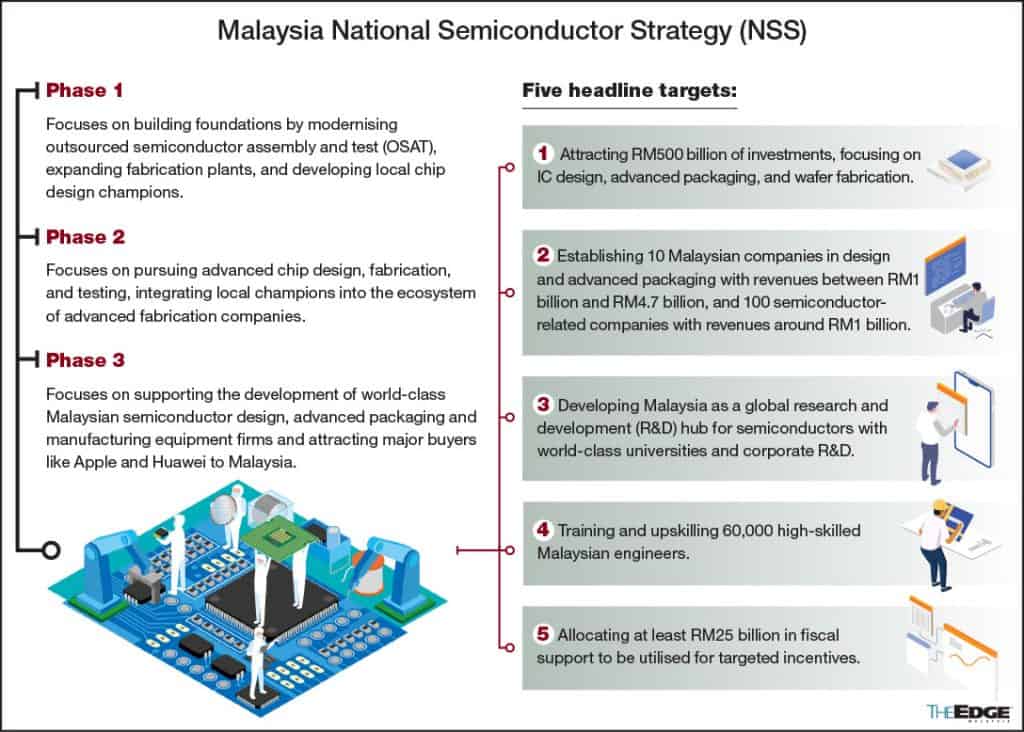
In the shift toward higher-value, innovation-driven industries, the success of the National Semiconductor Strategy (NSS) and the New Industrial Master Plan (NIMP) 2030 depends not on silicon, but on human capital.
Achieving the national target of 60,000 highly skilled engineers will rely not just on educating new graduates, but also on tapping into an existing strength: experienced technical and vocational education and training (TVET)-trained technicians who are already embedded across Malaysia’s manufacturing and industrial operations.
Bridging Experience and Engineering Responsibility
Many practitioners possess strong TVET backgrounds, technical diplomas, and years of industrial experience. They understand system behaviour, production variability, and operational constraints, forming a critical workforce that sustains daily operations across diverse manufacturing facilities.
Moving into technologist and engineer-level roles, however, often requires broader systems thinking, deeper analytical capability, and recognised academic credentials.
To deepen Malaysia’s automation capabilities, upskilling pathways must evolve to bridge technical hands-on experience with higher-level engineering responsibility.
Progressive workforce models that recognise prior training and on-the-job exposure can elevate skilled technicians into professionals capable of system design, integration, and optimisation — unlocking opportunities for both individuals and the organisations they serve.
Designed for Working Professionals
The Bachelor of Technology (Honours) in Mechatronic System (BTMS) offered by Wawasan Open University (WOU) is structured to complement ongoing professional practice while enabling academic progression.
Grounded in TVET principles and industry relevance, the programme integrates mechanical engineering, electronic engineering, computer science, and control systems engineering within an applied framework suited to engineering and technical professionals.
The BTMS allows learners to remain employed while pursuing recognised academic qualifications, providing a flexible upskilling pathway for individuals seeking to progress from technician-level roles to technologist and engineer-level responsibilities.
Interdisciplinary Engineering Focus
Modern industrial systems are integrated and complex. Effective engineers must understand how mechanical, electronic, control, and computing subsystems interact.
The BTMS curriculum adopts an interdisciplinary approach that integrates focus on key areas such as:
- Mechatronic systems
- Control systems
- Robotics
- Automation
- IoT-enabled manufacturing
Students develop the capacity to evaluate entire operational architectures, rather than isolated subsystems, preparing them for higher-level engineering challenges.
Flexible Learning That Works Around Your Job and Benefits Organisations
For working professionals, time is the most valuable currency. The BTMS learning model reflects the reality of the modern economy:
Work-Based Learning: Assignments are grounded in real-world workplace challenges. A student’s “homework” might actually be a process improvement project for their employer.
Blended & Flexible: Essential hands-on lab sessions combined with online tutorials mean no one has to choose between a paycheck and a degree.
Exam-Free Assessment: Practical-based evaluations are prioritised over rote memorisation, focusing on how a student solves a real-world problem.
Industry-aligned Curriculum: Modules are mapped to contemporary industrial technologies and practices, ensuring immediate relevance and applicability for learners in the workplace.
This structure enables working professionals to translate learning directly into their jobs while progressing toward formal academic qualifications.
Projects completed as part of the programme can contribute to ongoing workplace improvements, whether in automation, systems optimisation, or operational efficiency.
For the individual, this means gaining recognised academic qualifications while strengthening professional capability.
For the employer, it means developing higher-level skills within the existing workforce, without disrupting operations.
Career Pathways: Structured Progression into Engineering Roles
The BTMS establishes a clear pathway for technicians and diploma holders to transition into higher-level engineering responsibilities such as technologist or engineer roles.
Graduates may pursue positions in areas such as:
- Robotics and Automation Engineering
- Control Systems Engineering
- IoT and Smart Manufacturing
- Mechatronic Systems Design and Integration
The progression involves movement from equipment-level execution toward system-level design, integration and optimisation. Prior technical expertise is formalised and extended into roles that demand analytical depth, interdisciplinary coordination and technical leadership.
Take the Next Step
Enrolment for the May 2026 intake is now open. Professionals aspiring to deepen their expertise in robotics, automation, control systems or integrated mechatronic design may explore the BTMS and other programmes offered by the School of Technology & Engineering Science.
Newly enrolled students receive complimentary access to a curated suite of 80 Generative AI (GenAI) courses spanning business, STEM, and digital transformation. This additional provision strengthens digital fluency across functions and supports the development of future-ready capabilities aligned with organisational transformation priorities in a data-driven economy.
To learn more about our flexible entry pathways and how our programmes fit your professional goals, visit wou.edu.my or connect with a WOU advisor for further discussion.