
Insights from WOU Industry Leadership Dialogue on Future Workforce & AI Upskilling
Artificial intelligence is transforming manufacturing and the semiconductor industry at an unprecedented pace — but technology itself is not the greatest challenge. According to industry leaders, the real test lies in building a workforce with the skills, agility, and leadership capability to harness AI effectively.
That was the clear message emerging from Wawasan Open University’s (WOU) Industry Leadership Dialogue: Future Workforce & AI Upskilling, where leaders across Penang’s semiconductor ecosystem identified five recurring workforce challenges that are gradually reshaping the future of the industry.
Held on 19 June 2026 at WOU’s Homestead in partnership with Coursera, the closed-door dialogue brought together senior leaders from across the semiconductor and electronics value chain, including chip design, machine vision and automation, assembly and test, specialty materials, enterprise technology, and talent development.
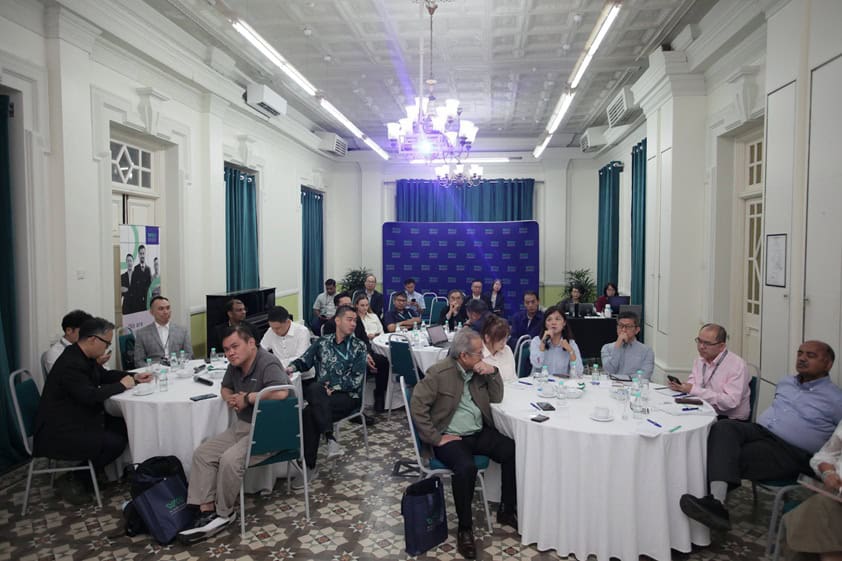
Across different parts of the value chain, the message was consistent: AI adoption is accelerating, but workforce capability, organisational response, and knowledge-transfer systems are not always keeping pace.
AI needs people, not just code
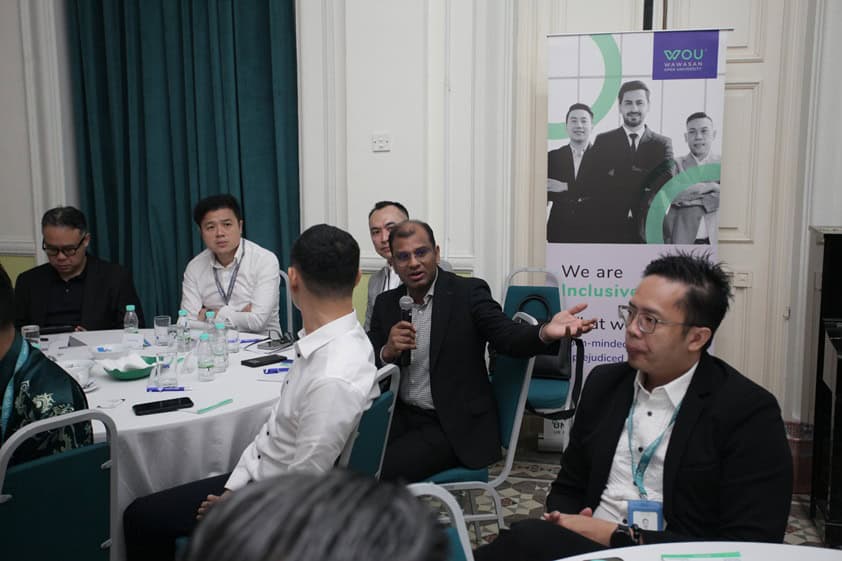
Coursera representatives Tarun Nallu (pictured below, with mic), Director of Strategic Accounts, Asia Pacific, and Elena Shloma, Account Director, Coursera for Business, Asia Pacific, framed the discussion around AI-driven workforce transformation and the shift from role-based to skills-based learning.
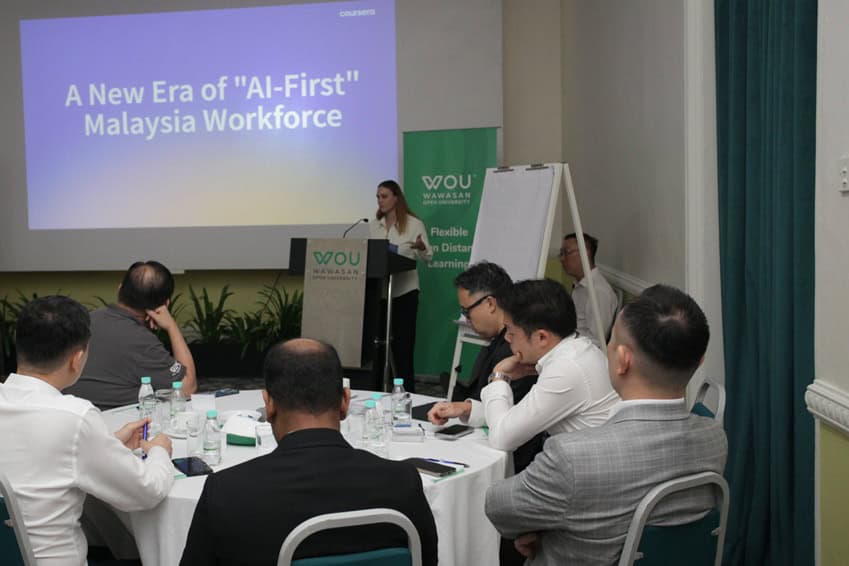
Shloma highlighted a mismatch between investment in AI technology and in the people expected to use it. Technology alone, she said, would not deliver the desired gains unless employees could apply AI, interpret information, and redesign work.
“AI doesn’t run on code itself. It is run by people who know how to use AI, innovate together with AI, and apply new tools. We should therefore view AI as a means of augmenting human capabilities rather than simply replacing tasks,” she said. Without this mindset, technology alone delivers diminishing returns.
Speed is outpacing organisational response
For Vasu Velayuthan (pictured below), Chief Strategy Officer of TT Vision Technologies, speed has become a defining measure of competitiveness. “Speed is the new currency,” he said, stressing that manufacturing teams must turn machine data into useful information, act on it, and resolve production or yield issues faster.
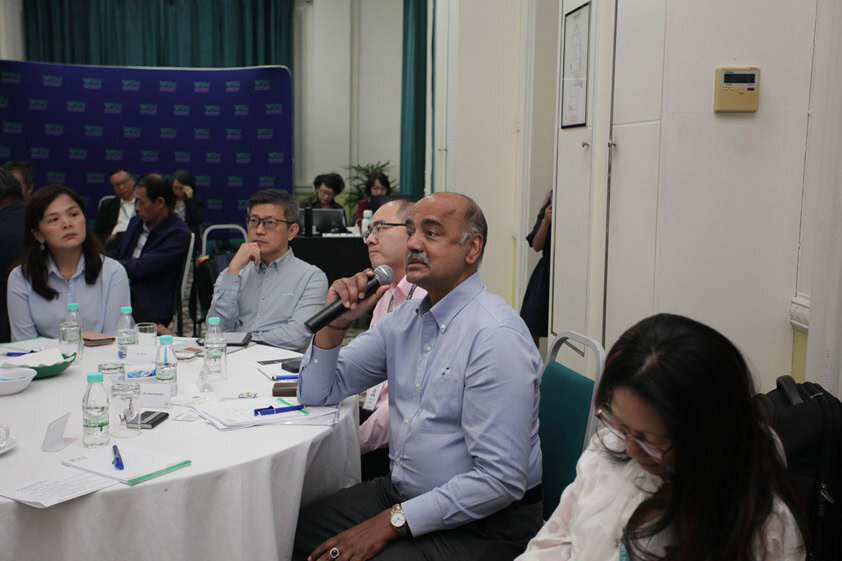
Future engineers, he added, will need multidisciplinary capabilities spanning technical knowledge, AI literacy, data skills, and problem-solving.
At Dell Technologies, Vivien Liaw (pictured below, with mic), Director, Supply Chain, said agentic AI is also changing expectations by making performance gaps more visible.
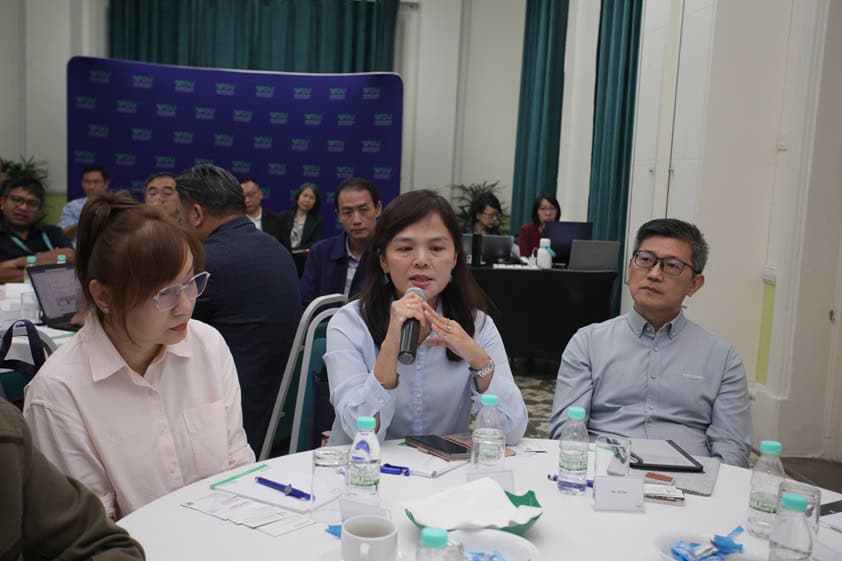
“What AI has enabled is quick visibility to surface things that are not working,” she said.
As problems become visible faster, teams are expected to respond faster. The workforce challenge is therefore not limited to adopting AI tools, but extends to how quickly organisations can equip people to make decisions, solve problems, and act with confidence.
AI multiplies skills, but technical fundamentals remain essential
Participants also stressed that AI should be viewed as a multiplier of skills, not a substitute for technical depth. In fields such as IC design, manufacturing analytics, specialty materials, and process engineering, AI can improve productivity, but only when employees have the judgement to validate and apply its outputs correctly.
Yeap Soon Lee (pictured below), Executive Vice President of Oppstar Berhad, said this is especially important for future IC design talent: “The basics need to be there. Without that, you are just using AI, and it becomes garbage-in, garbage-out. AI is just a tool.”
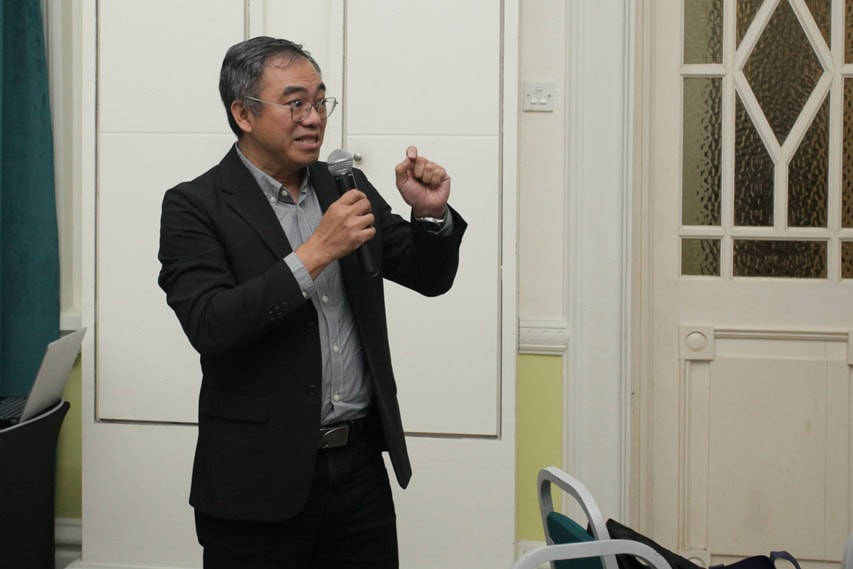
CS Tan (pictured below), CEO of Penchem Technologies Sdn Bhd, echoed the concern, warning that employees must understand the principles behind the tools they use.
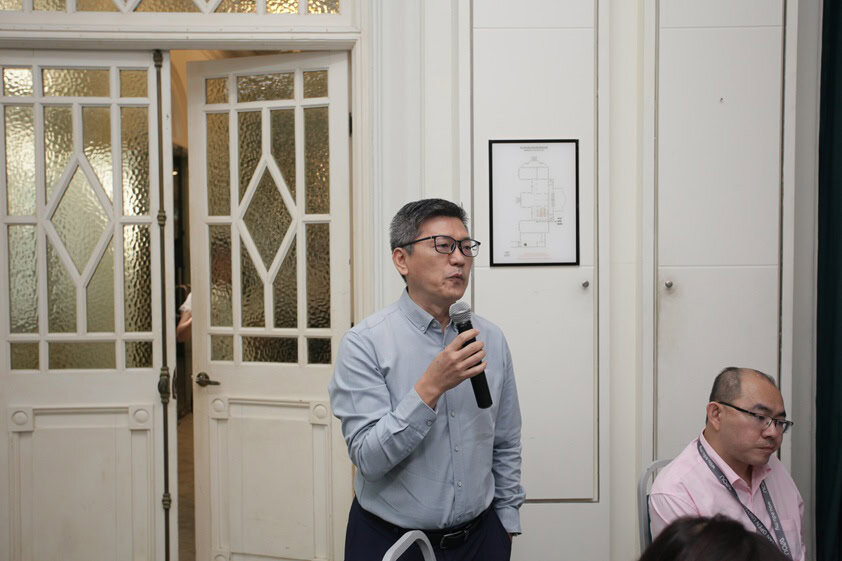
“Without knowing the fundamentals, the tool is very dangerous,” he said.
The takeaway was clear: AI can help employees move faster, but technical grounding, human judgement, and validation remain critical.
A generational and knowledge-transfer gap is widening
Another recurring concern was the growing divide between experienced employees and younger talent.
Noorazidi Bin Che Azib (pictured below), Deputy Vice President of Inari Amertron Berhad, noted that senior employees possess deep, hands-on expertise in machine maintenance, repair, troubleshooting, and process engineering, while younger employees are often more comfortable with digital and generative AI tools but may lack operational context.
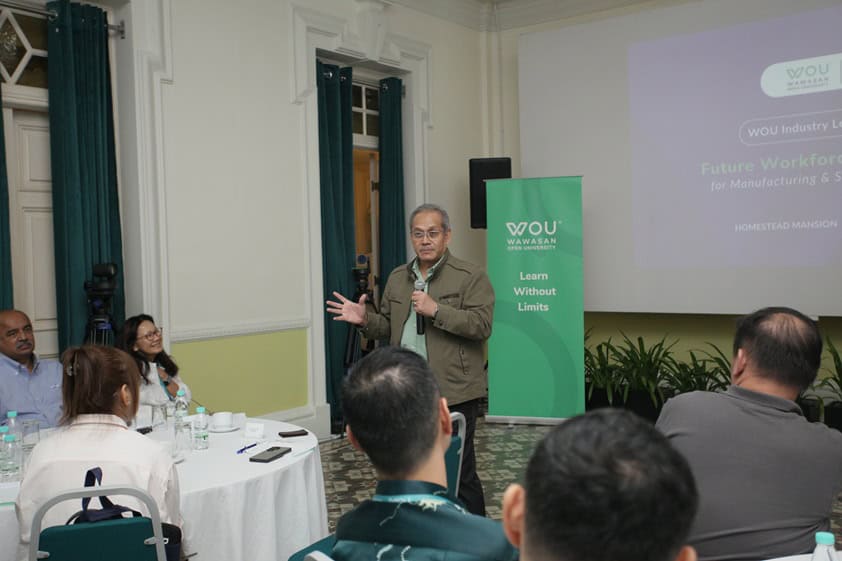
To bridge this divide, he suggested that senior technical knowledge could be captured in structured databases and supported through AI-enabled retrieval tools, allowing accumulated experience to be transferred more systematically to newer employees. As experienced employees retire or move on, companies must find better ways to preserve institutional knowledge before it is lost.
Execution, not access to information, is the real bottleneck
The dialogue also highlighted a practical reality: information is increasingly available, but execution remains difficult.
Data exists across machines, dashboards, systems, reports, and teams. However, many organisations still struggle to turn that information into timely action, especially in production environments where delays can affect yield, quality, and delivery.
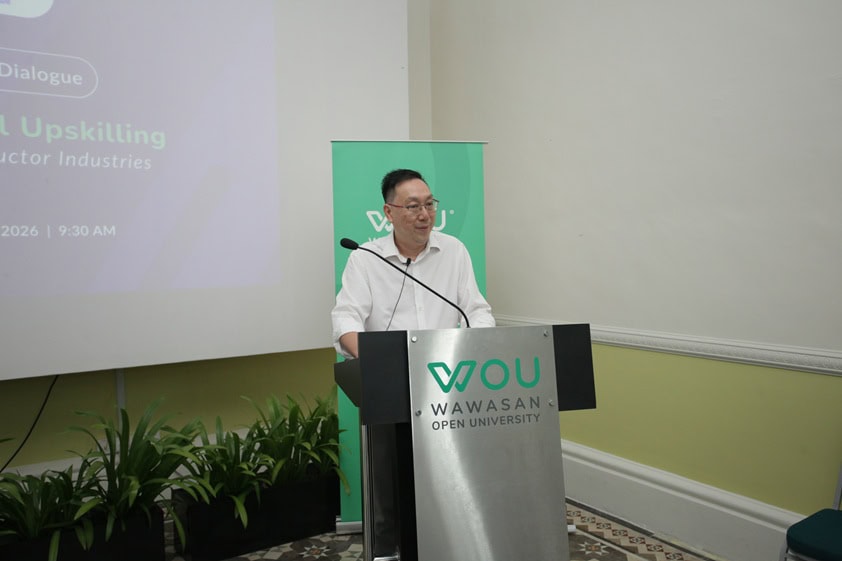
Lim Chuen Ming (pictured below), the dialogue facilitator, summarised the issue in his closing synthesis: “Information is everywhere. What’s missing is how fast it turns into action on the shop floor.”
Multidisciplinary and continuous upskilling is now necessary
As AI changes how work is organised, employees can no longer depend only on narrow job knowledge. Future-ready talent will need technical depth, AI literacy, data skills, customer understanding, problem-solving ability, and leadership readiness.
Vasu said this shift is already taking place. “The expectation now is no longer for one person to stay within one job or discipline. Work has become multidisciplinary,” he said.
CS Tan said organisations need to move employees from “I-shaped” expertise towards broader “T-shaped” and “X-shaped” capability, supported by clearer skills mapping, internal trainers, and practical learning environments. He cautioned that generic training often fails when it is assigned for compliance rather than based on actual skills needs.
Dell’s Chan Kim Beng (pictured below), Senior Advisor, Learning and Development, said AI is also reshaping learning and development roles, with Dell’s internal discussions pointing towards the emergence of the “capability architect” as a future role for L&D professionals.
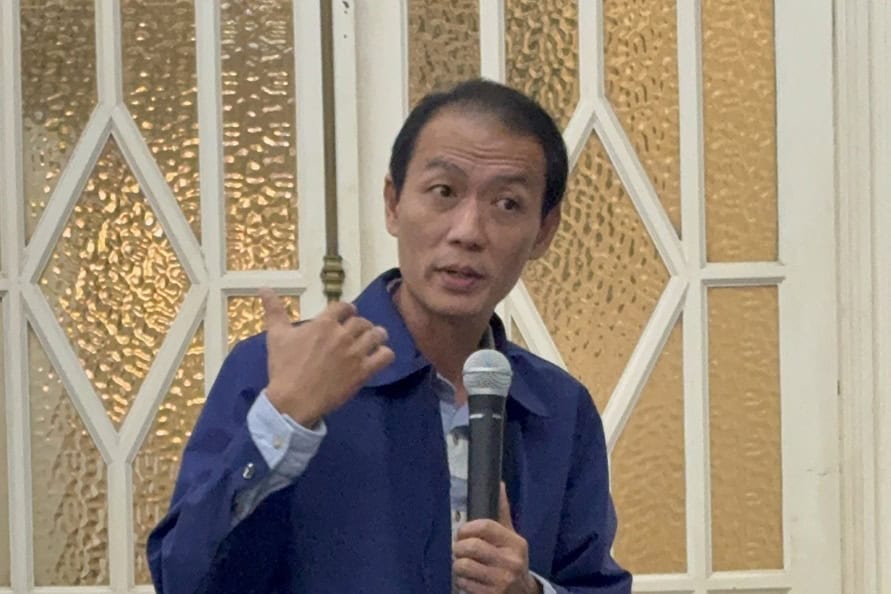
Assoc. Prof. Dr. Beh Kok Hooi (pictured below), of ViTrox added that AI expectations are moving beyond automation towards decision-support capabilities, including the use of AI agents.
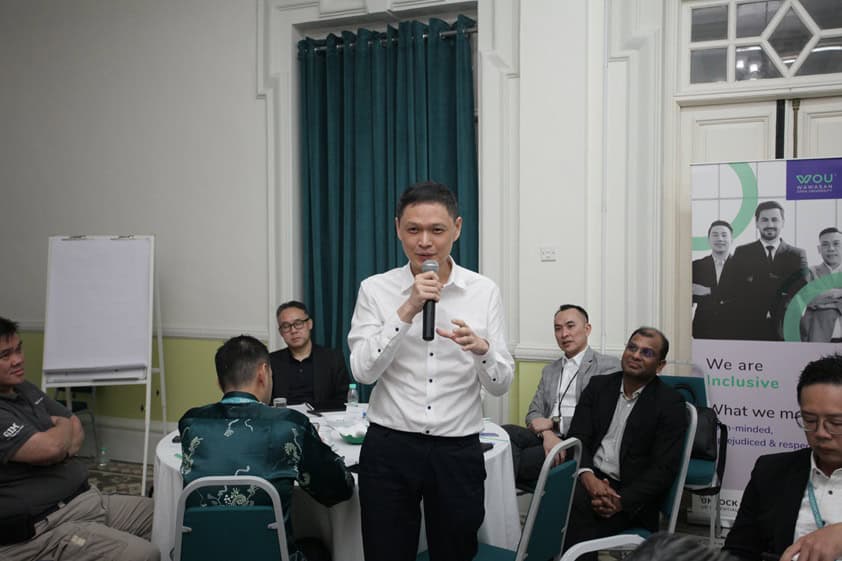
These perspectives point to a common need: upskilling must be continuous, role-specific, and closely connected to real work. Participants also stressed the need for role-based skills mapping, internal trainers, practical learning environments, and stronger incentives for employees to keep learning.
Turning insight into action
The dialogue reinforced the need for closer academia-industry collaboration to turn workforce insights into flexible, skills-based learning solutions aligned with real workplace demands.
Professor Ts. Dr. Yap Eng Hwa (pictured below), WOU Vice-Chancellor, said the University’s corporate training arm, WOU Academy, is well positioned to help organisations convert workforce capability needs into recognised, operationally viable learning pathways.
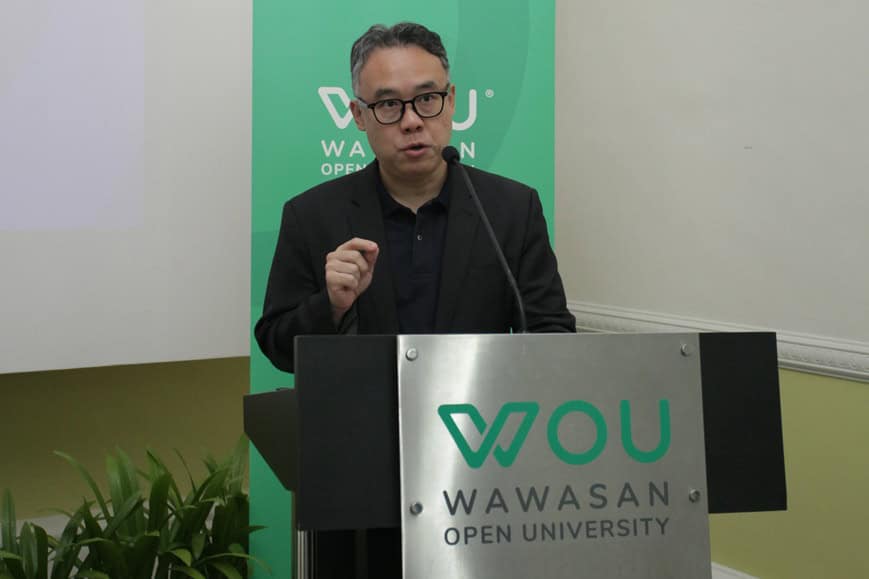
“Universities and industry must evolve from reactive training to the proactive creation of a resilient, highly agile talent ecosystem that secures Malaysia’s standing in the global supply network,” he said.
The next phase will focus on translating these insights into practical action through continued collaboration between WOU, Coursera, and industry stakeholders. This includes identifying skilling needs more clearly, co-developing workplace-relevant learning pathways, and exploring pilot programmes in areas such as AI readiness, technician and engineer upskilling, technical fundamentals, knowledge transfer, and applied industry exposure.
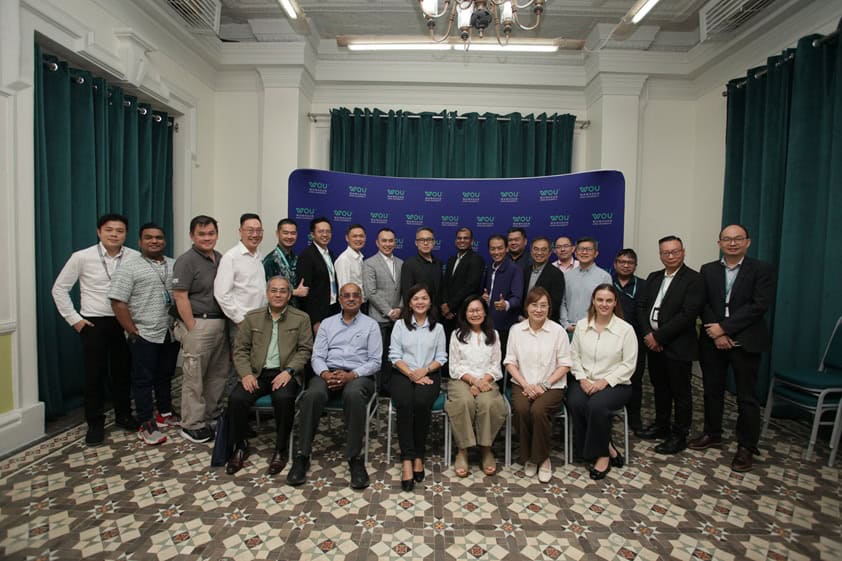
By connecting AI tools with human judgement, mentorship, and rapid execution, structured workforce development can help strengthen Malaysia’s semiconductor and manufacturing competitiveness in an increasingly AI-driven industry.